
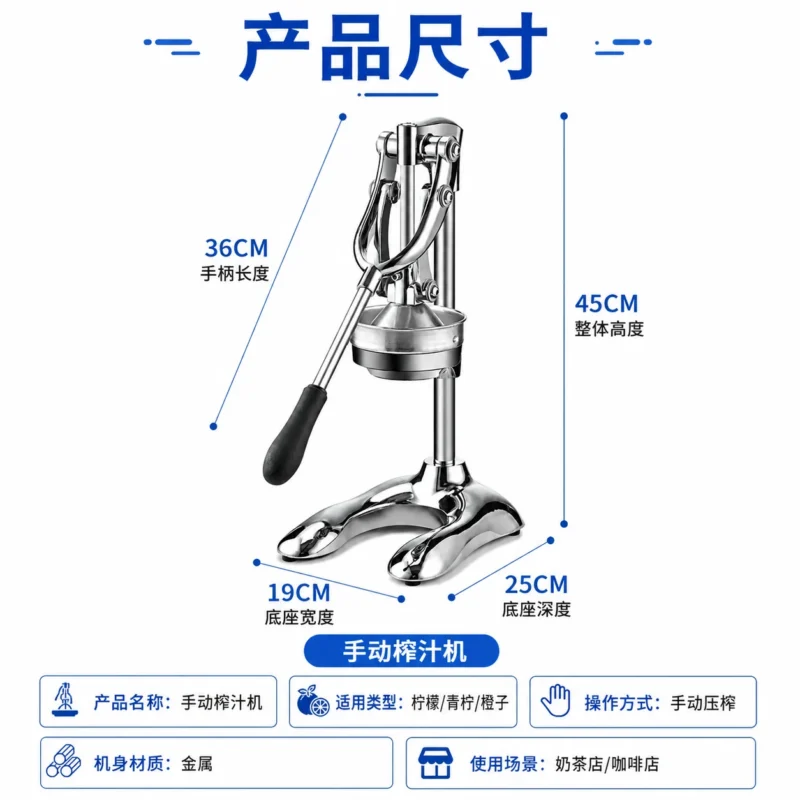
manual citrus press is a practical hand-operated squeezing solution for cafés, juice bars, dessert stores and other beverage businesses that frequently prepare fresh lemon, lime and orange juice. With a 36 cm lever handle, approximately 45 cm overall height and a stable metal base, the machine helps operators press citrus fruit efficiently without relying on an electric motor.
Fresh Citrus Juice with Simple Manual Operation
This guide explains the specifications, advantages, applications, correct operation, cleaning methods and buying considerations of this hand-operated citrus juicer for beverage businesses.
1. manual citrus press: Product Overview
Fresh citrus is widely used in modern beverage menus. Lemon tea, lime soda, orange tea, fruit coffee and seasonal specialty drinks all require fast and repeatable juice preparation. For small and medium beverage shops, this hand-operated citrus press provides a straightforward way to produce fresh juice without occupying the electrical capacity required by a motorized machine.
The machine uses a long lever to multiply the operator’s downward force. After a halved citrus fruit is positioned in the pressing cup, the user pulls the handle down and the upper press compresses the fruit. Juice flows through the lower section into a cup or preparation container while most peel and larger pulp remain inside the pressing area.
Because the structure is mechanical, operation is easy to understand and maintenance is relatively simple. There is no complicated control panel, speed setting or programming process. For stores that need fresh citrus ingredients throughout the day, the manual press can become a reliable preparation tool beside the tea, coffee or fruit-drink station.
2. manual citrus press: Specifications
Countertop size is important in milk tea shops and cafés because the preparation area is often shared by sealing machines, tea brewers, blenders, shakers and other tools. This juicer has a relatively compact footprint while the tall lever structure provides enough mechanical leverage for citrus pressing.
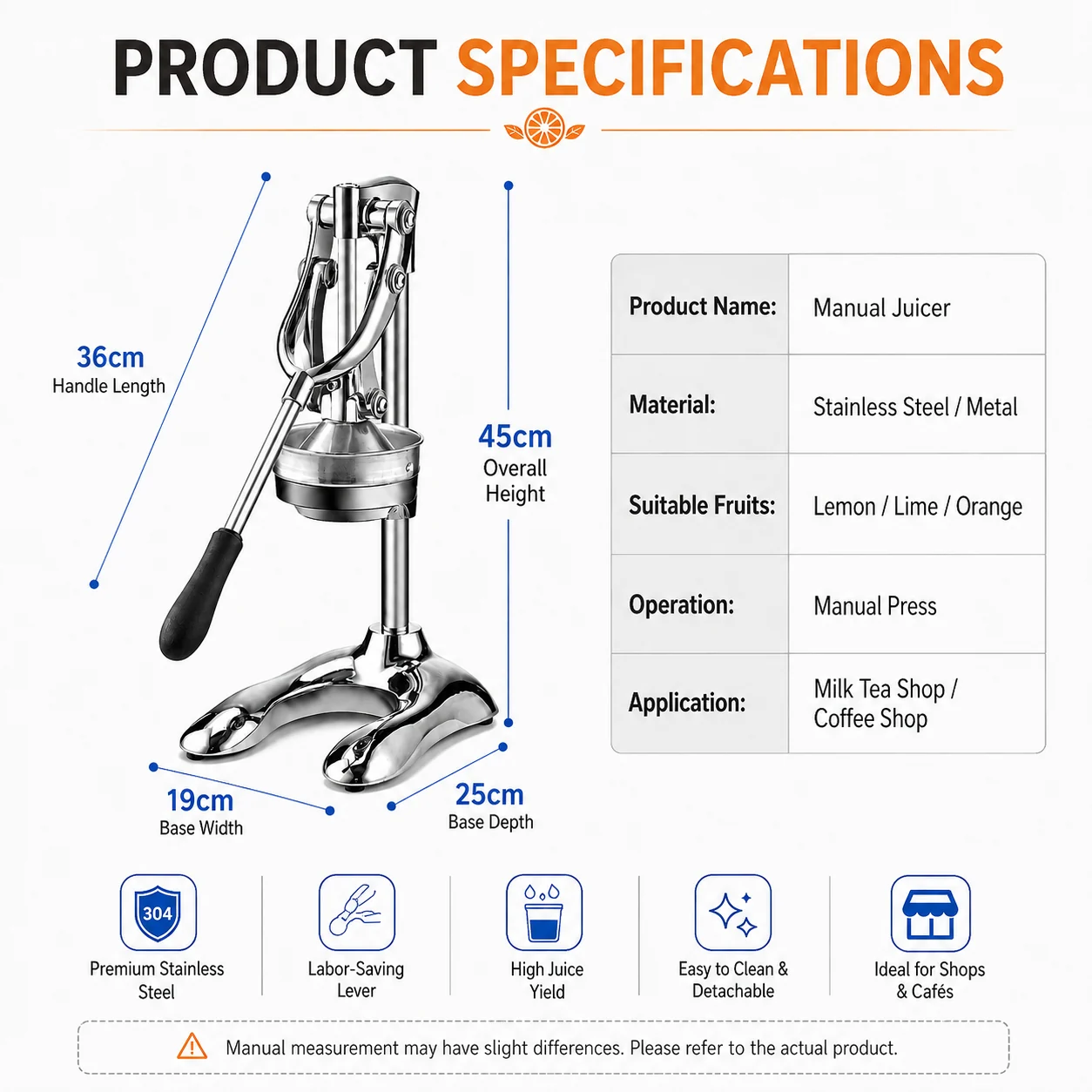
| Product Name | Manual Juicer / Manual Citrus Press |
|---|---|
| Operation | Manual lever press |
| Suitable Fruits | Lemon, lime and orange |
| Body Material | Metal |
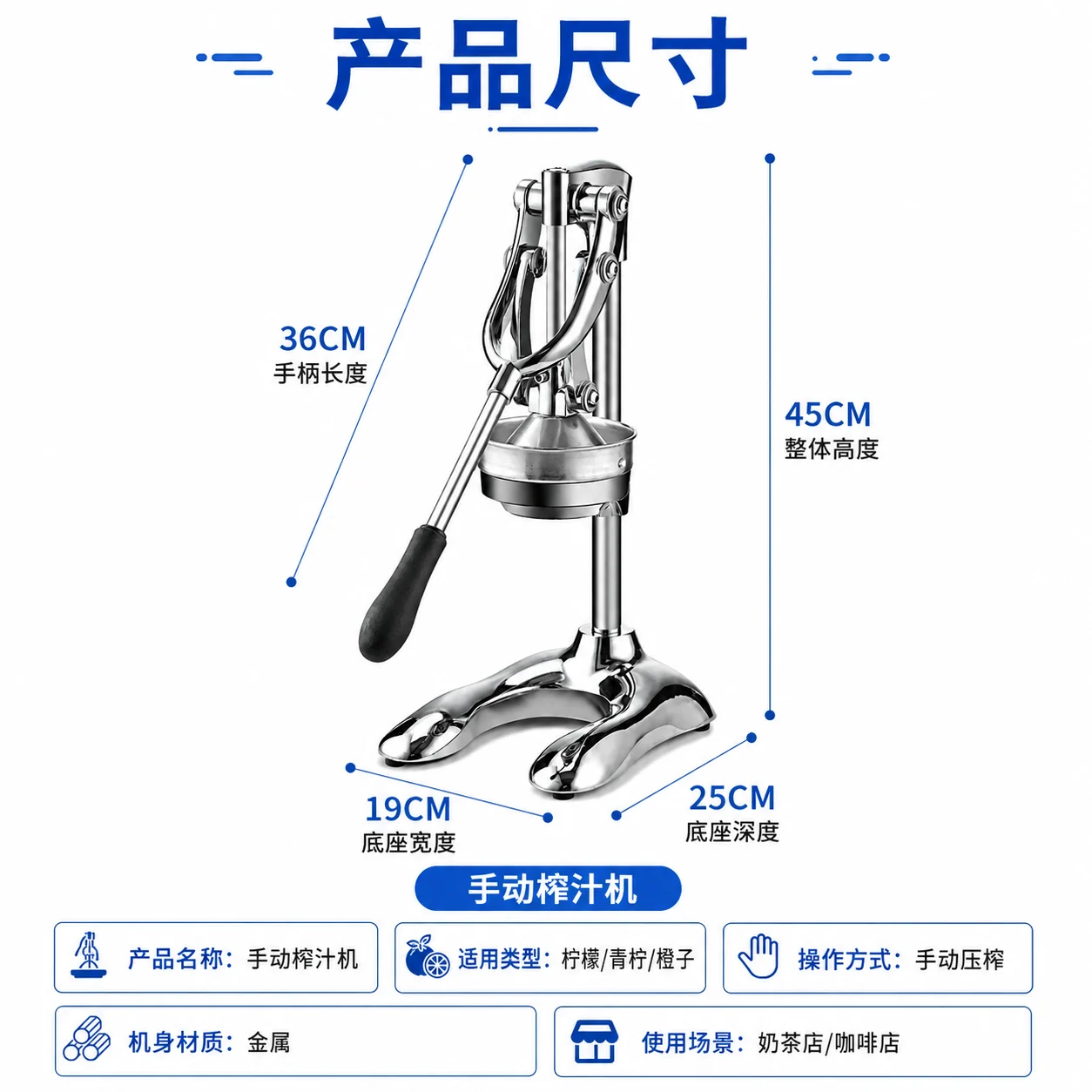
| Handle Length | Approx. 36 cm |
| Overall Height | Approx. 45 cm |
| Base Width | Approx. 19 cm |
| Base Depth | Approx. 25 cm |
| Recommended Applications | Milk tea shop, coffee shop, juice bar and beverage store |
| Power Requirement | No electricity required |
Manual measurements may have slight differences. Confirm final materials, net weight, packaging, fruit-size compatibility and included removable parts before placing an order.
3. Core Advantages for Commercial Citrus Preparation
Long Labor-Saving Lever
The approximately 36 cm handle gives the operator useful leverage, making it easier to apply steady pressure to citrus fruit.
No Electricity Required
Manual operation allows the juicer to work without a motor or electrical outlet, making countertop placement more flexible.
Stable Metal Base
The broad base supports the tall lever mechanism and helps keep the juicer steady during downward pressing.
Fresh Juice on Demand
Operators can squeeze citrus only when needed, which supports fresh beverage preparation and reduces the need for long-term juice storage.
Simple Mechanical Structure
There are no electronic controls to learn. New staff can understand the basic operation quickly after proper training.
Easy Daily Cleaning
Fruit-contact parts can be cleaned after use, while the polished exterior can be wiped to maintain a professional appearance.
For many beverage stores, the most important advantage is consistency. A long lever allows staff to use a repeatable pressing motion instead of squeezing citrus by hand. This can make drink preparation more standardized and reduce hand fatigue during repeated orders.
4. manual citrus press: Applications
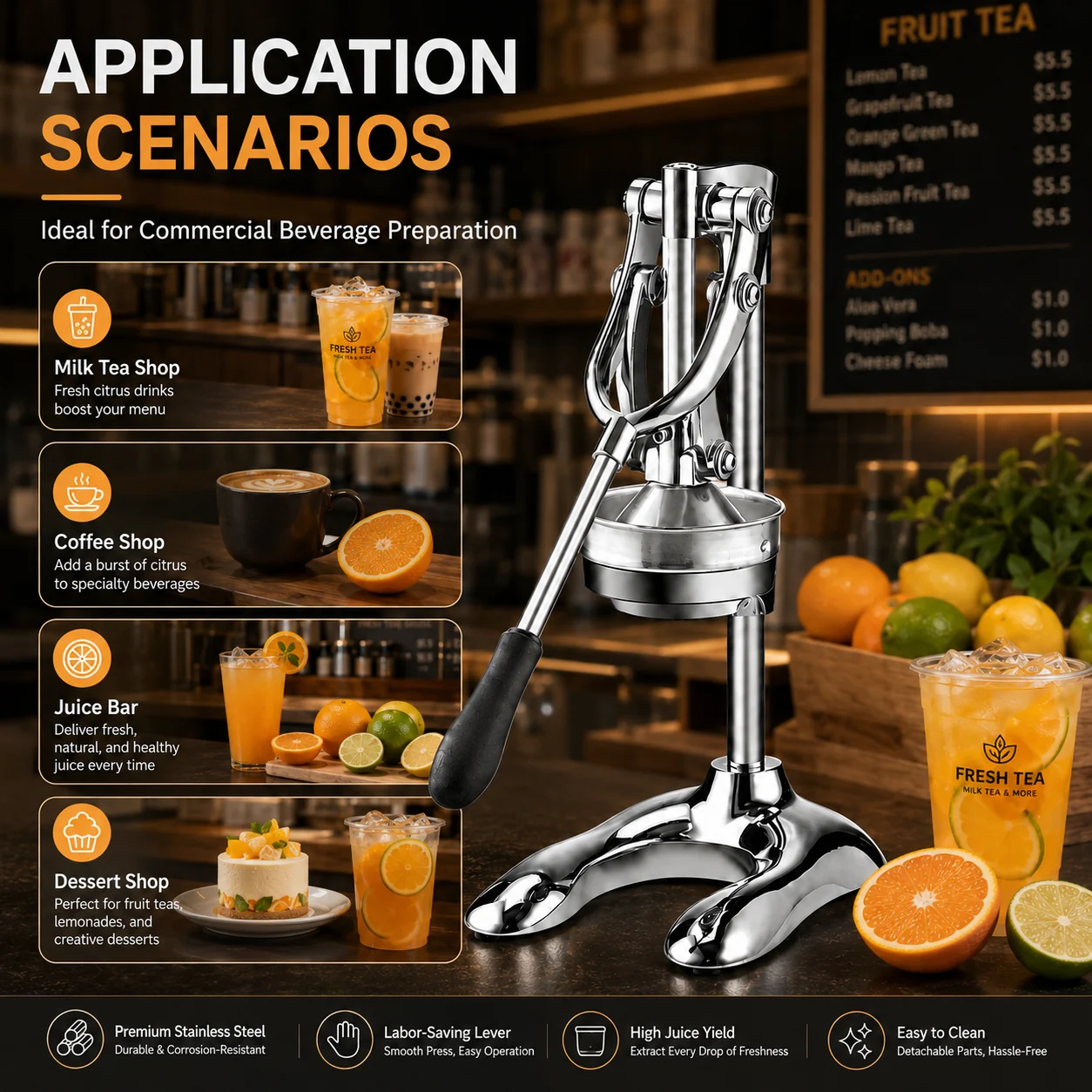
Milk Tea and Fruit Tea Shops
Fresh lemon juice is commonly used in lemon tea, green tea, black tea, sparkling tea and seasonal fruit drinks. Placing the juicer near the tea preparation station allows staff to press fresh citrus immediately before mixing the drink.
Coffee Shops
Modern cafés increasingly offer espresso tonic, orange coffee, citrus cold brew and non-coffee fruit beverages. A manual citrus press gives baristas another tool for preparing fresh flavor components without requiring a dedicated electric juicer.
Juice Bars
Juice bars can use the machine for individual citrus portions, recipe adjustment and made-to-order drinks. It is especially useful when a store needs a simple press for lemons and limes in addition to larger fruit-processing equipment.
Dessert and Snack Shops
Dessert stores may use citrus juice for lemonades, fruit desserts, sauces and toppings. A compact press can be positioned close to the drink or dessert assembly area.
Restaurants and Breakfast Shops
Restaurants can use fresh citrus for beverages, dressings and kitchen preparation. Since the juicer does not require electricity, it can be moved to different preparation areas when needed.
5. How to Use a manual citrus press
Correct fruit positioning and a smooth pressing motion are important for efficient operation. Before the first use, place the machine on a flat and stable countertop and make sure all fruit-contact parts are clean and installed correctly.
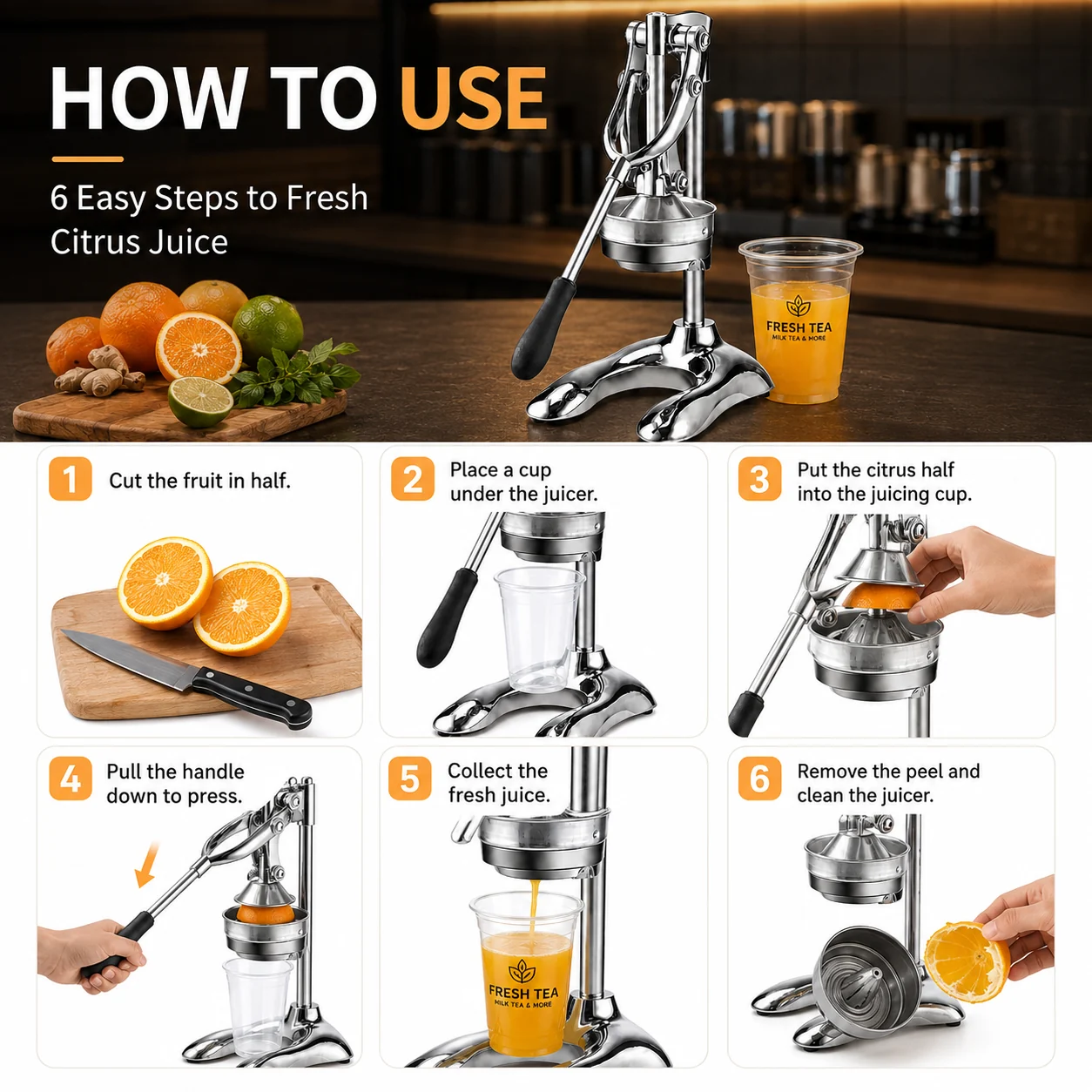
Wash and Cut the Fruit
Wash the lemon, lime or orange and cut it into suitable halves. Remove damaged fruit before processing.
Place a Collection Cup
Position a clean cup, pitcher or preparation container below the juice outlet before pressing.
Position the Citrus Half
Place the fruit centrally in the pressing cup. Correct positioning helps distribute pressure more evenly.
Pull the Handle Down
Hold the machine steady when necessary and pull the long handle downward in one controlled motion. Avoid sudden impact or excessive force.
Collect the Fresh Juice
Allow the juice to drain into the prepared container. For recipes that require a fixed amount, measure the juice before adding it to the beverage.
Remove the Peel and Residue
Raise the handle, remove the pressed peel and pulp, and prepare the machine for the next fruit portion.
6. Beverage-Shop Workflow Tips
Prepare Citrus in Batches
During peak periods, staff can wash and halve a reasonable quantity of citrus in advance according to food-safety procedures. This reduces preparation time when orders arrive.
Place the Juicer near the Drink Assembly Area
Position the juicer where staff can reach the fruit, collection cup and drink-mixing station without crossing another employee’s work path.
Use a Standard Recipe
Measure the juice used in each drink. Even though the machine presses fruit consistently, different citrus sizes and ripeness levels can produce different juice volumes.
Separate Fresh and Used Fruit Areas
Keep washed fruit away from pressed peels and waste. A small waste container beside the juicer can help maintain a cleaner workflow.
Clean before Residue Dries
Citrus juice contains acids and natural sugars. Cleaning the pressing parts soon after use makes residue easier to remove and helps protect the appearance of the machine.
7. Manual Citrus Press Cleaning and Maintenance
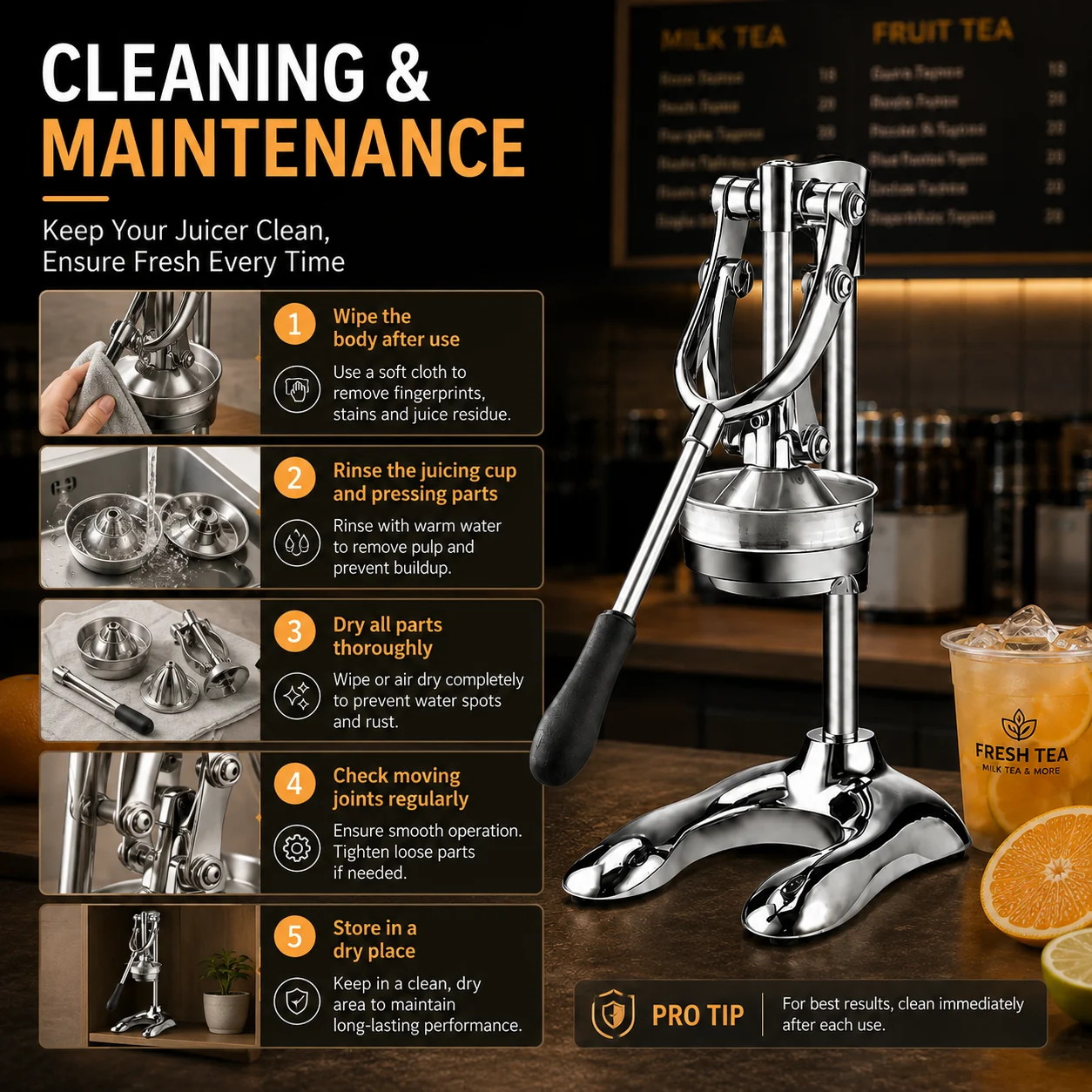
Clean Fruit-Contact Parts after Use
Remove pulp, seeds and juice residue from the pressing cup, cone and other removable fruit-contact parts. Rinse or wash them according to the material and supplier instructions.
Wipe the Main Body
Use a soft damp cloth to wipe splashes from the frame, handle and base. Do not allow acidic juice to remain on polished surfaces for long periods.
Dry All Components
Dry cleaned parts before reassembly. Keeping the machine dry helps reduce water marks, residue buildup and unnecessary corrosion risk.
Inspect the Lever and Hinges
Check moving joints, fasteners and pivot points regularly. If the handle becomes loose, unusually stiff or misaligned, stop use and inspect the mechanism.
Keep the Base Stable
Check that the feet and base remain flat and secure. A stable base is especially important because the machine is operated with downward force.
- Remove fruit pulp and seeds after each service period.
- Use mild cleaning products suitable for food-contact equipment.
- Avoid abrasive tools that may scratch polished surfaces.
- Dry the juicer before long-term storage.
- Inspect bolts and moving joints periodically.
8. Buying a manual citrus press
A manual citrus press looks simple, but commercial buyers should still compare several practical details before ordering. The right choice depends on daily volume, fruit size, countertop space and the store’s cleaning process.
- Fruit compatibility: confirm the supported size range for lemons, limes and oranges.
- Frame material: verify the actual metal or stainless-steel components used in the final model.
- Food-contact parts: confirm the material of the pressing cup, cone and juice-contact surfaces.
- Lever length: longer leverage can make repeated pressing easier for staff.
- Base stability: choose a wide and secure base for commercial countertop operation.
- Removable parts: removable fruit-contact components are generally easier to clean.
- Replacement parts: ask whether cups, cones, handles, joints or fasteners can be replaced.
- Packaging: confirm carton size, gross weight and export packing before wholesale orders.
For a new beverage shop, manual equipment can be attractive because it requires little setup. However, stores with extremely high citrus volume should also compare throughput with electric citrus juicers before making a final decision.
9. Manual Citrus Press FAQs
What fruits can this hand press squeeze?
The product is intended for common citrus fruits such as lemons, limes and oranges. Confirm the maximum fruit size before ordering.
Does the juicer require electricity?
No. The machine is operated manually with a long lever.
What is the approximate product size?
The shown dimensions are approximately 45 cm overall height, 19 cm base width and 25 cm base depth, with a 36 cm handle.
Is it suitable for milk tea shops?
Yes. It can be used to prepare fresh citrus ingredients for lemon tea, fruit tea and other beverage recipes.
Can it be used in coffee shops?
Yes. Cafés can use fresh citrus juice in specialty coffee, tonic drinks, fruit beverages and seasonal menu items.
How should the juicer be cleaned?
Remove fruit residue, clean the fruit-contact parts, wipe the body and dry all components before reassembly or storage.
Where can I view the product page?
Visit the Commercial Manual Citrus Juicer product page for product information.
Conclusion: A Practical Citrus Juicing Solution
This hand-operated juicing tool is useful for businesses that rely on fresh lemon, lime and orange juice. Its mechanical lever operation eliminates the need for electricity, while the compact base makes it suitable for beverage counters with limited space.
For milk tea shops, cafés, juice bars and dessert stores, the machine can support faster fresh-fruit preparation and a more standardized workflow. Proper fruit positioning, controlled pressing and regular cleaning will help maintain reliable daily performance.
Request Product Details and Wholesale Pricing
Contact Foshan Weiqi Electromechanical Equipment Co., Ltd. for product details, wholesale pricing, packaging information and export inquiries.