
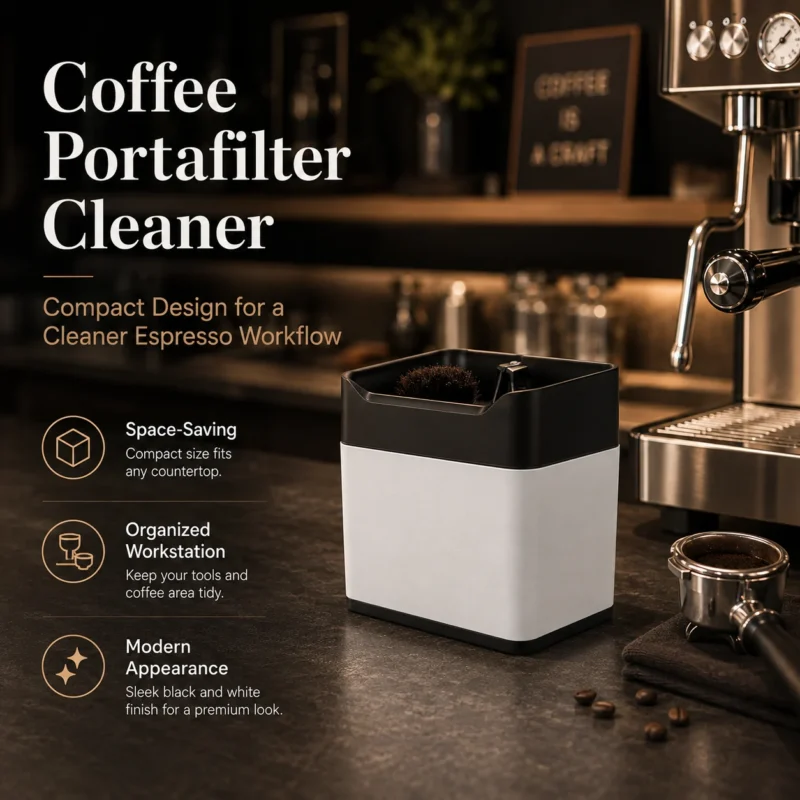
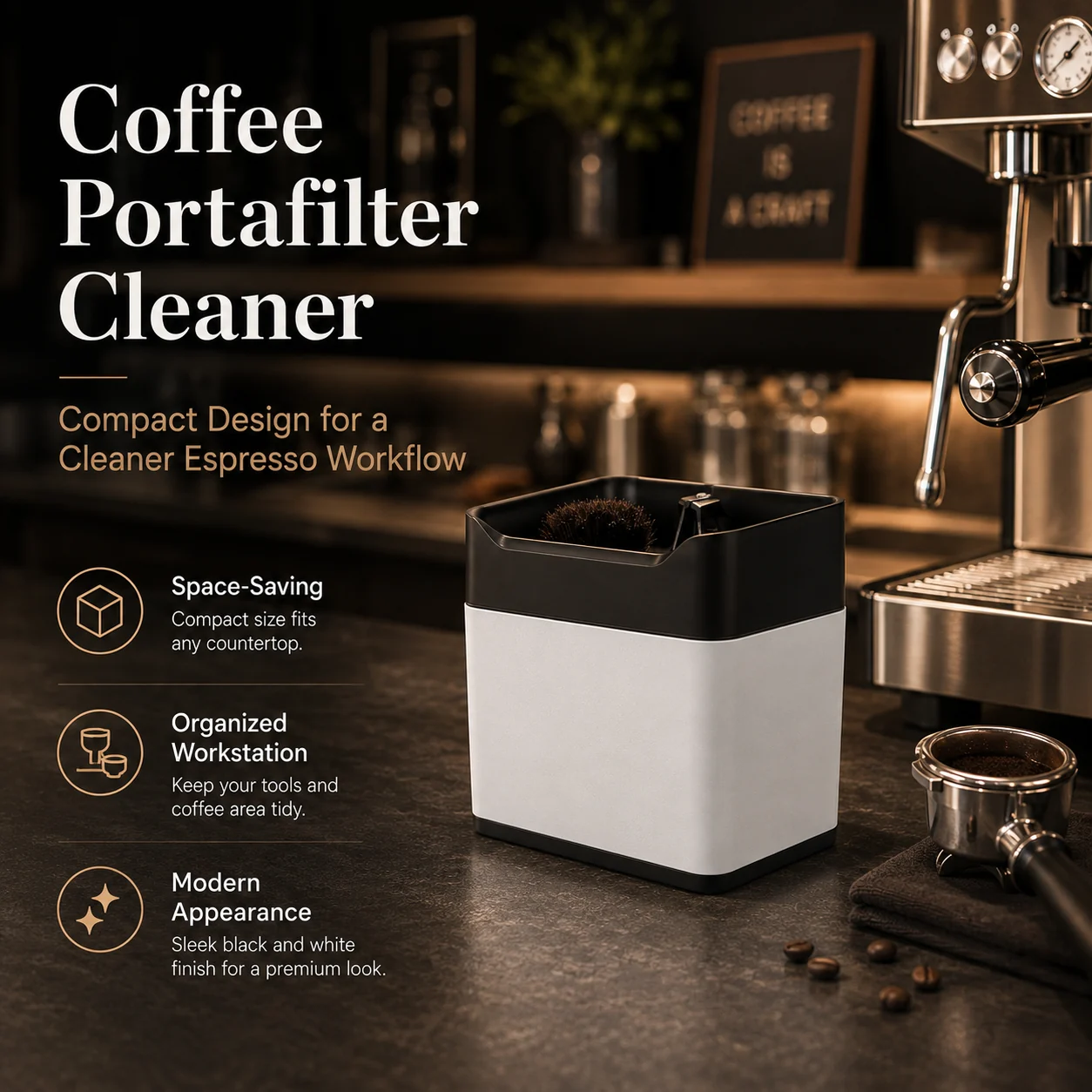
Commercial coffee portafilter cleaner is a compact powered cleaning station designed to help cafés, coffee shops, beverage stores and home espresso users remove used coffee grounds, clean the portafilter basket and keep the espresso workstation better organized. The unit combines a scraper blade, a cleaning brush and an internal grounds container in one countertop machine. Its approximate size of 262 × 138 × 216 mm makes it easy to position beside an espresso machine without occupying excessive bar space.
This guide explains the product specifications, operating principle, core advantages, correct operation, placement, maintenance and buying considerations of a compact coffee portafilter cleaner.
1. Commercial Coffee Portafilter Cleaner Overview
Espresso preparation produces used coffee pucks, loose grounds and fine residue after almost every extraction. When the operator relies only on manual knocking and wiping, coffee particles can spread around the grinder, tamper and espresso-machine area. During busy service, repeated manual cleaning can also interrupt the barista’s workflow.
This commercial coffee portafilter cleaner creates a dedicated station for two important jobs. First, the inverted portafilter is pressed against the scraper blade to remove the used coffee puck and loose grounds. Second, the portafilter is moved to the powered cleaning brush and pressed downward so the brush cleans the inside of the basket. The removed grounds fall into the internal collection container instead of spreading across the counter.
The machine is suitable for shops that want a faster, quieter and more organized alternative to repeatedly striking a portafilter against a conventional knock box. Its compact structure allows it to sit near the espresso machine, grinder and tamper so the operator can complete the full coffee-preparation cycle with less unnecessary movement.
2. Commercial Coffee Portafilter Cleaner Specifications
The product uses a compact rectangular body with a black upper operating section and a white lower collection body. The dimensions shown in the product material are approximately 262 mm wide, 138 mm deep and 216 mm high.
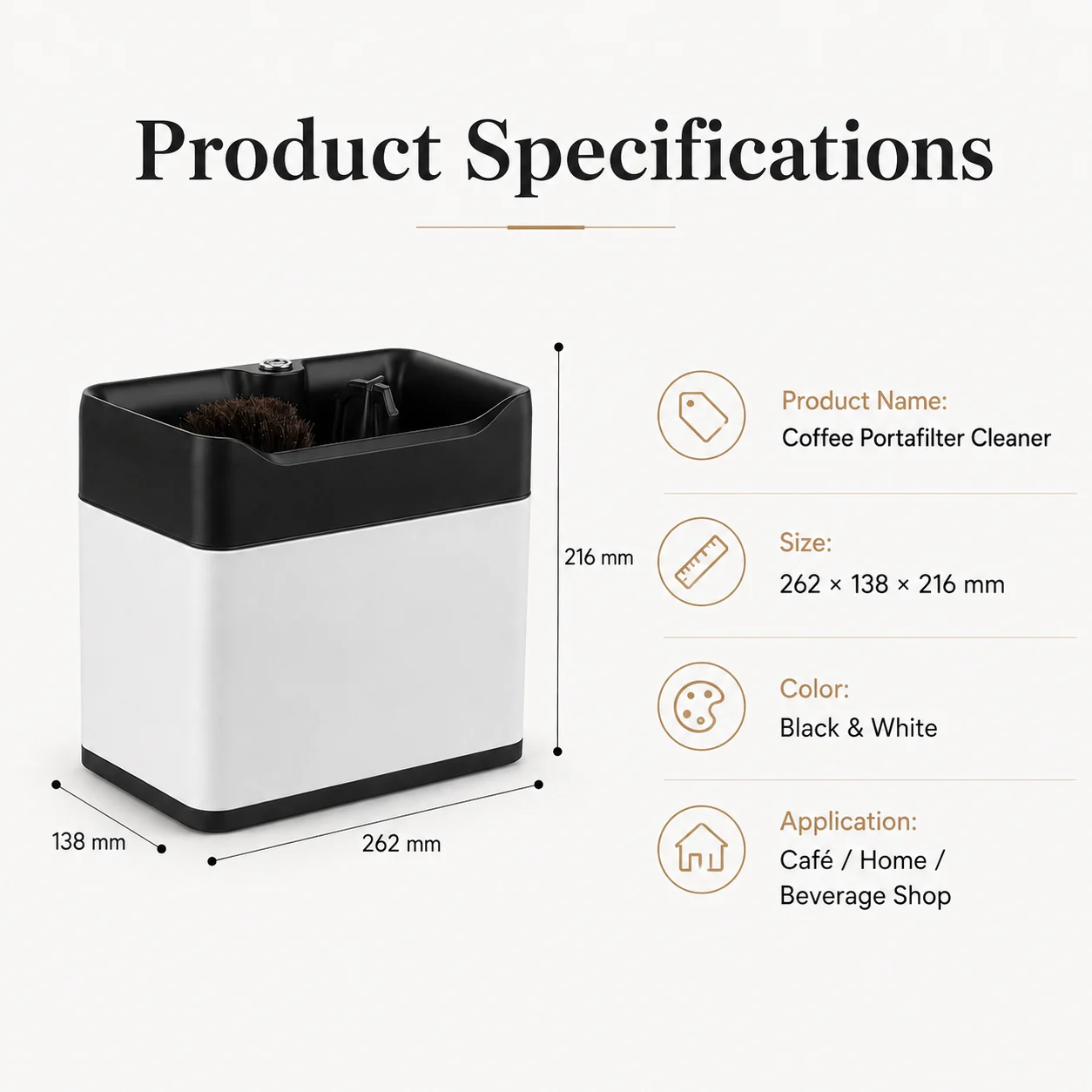
| Product Name | Coffee Portafilter Cleaner |
|---|---|
| Approximate Size | 262 × 138 × 216 mm |
| Colour | Black and White |
| Installation | Countertop placement |
| Main Cleaning Parts | Scraper blade and powered cleaning brush |
| Waste Collection | Internal removable grounds container |
| Recommended Applications | Coffee shop, café, beverage shop and home espresso bar |
| Recommended Position | Beside the espresso machine, grinder or tamping station |
Manual measurements may have slight differences. Confirm the voltage, plug, motor specification, included accessories, materials and final configuration before ordering.
3. How the Commercial Coffee Portafilter Cleaner Works
The top operating section is divided into a scraping area and a brush-cleaning area. The operator holds the portafilter upside down so the basket faces the machine. By placing it against the scraper blade and pressing downward, the used coffee puck and larger residue are released into the collection container.
After scraping, the portafilter is moved to the brush side. The basket is positioned over the cleaning brush and pressed downward. The powered brush rotates inside the basket and removes coffee particles that remain around the base, wall and filter holes. The operator then lifts the portafilter and inspects the basket before preparing the next coffee dose.
This two-stage process is important. The scraper handles the larger coffee puck and bulk residue, while the brush completes the finer basket cleaning. Using the two sections in the correct order reduces the load on the brush and helps maintain a faster workflow during repeated espresso preparation.
4. Key Advantages for Faster Portafilter Cleaning
Two-Stage Cleaning
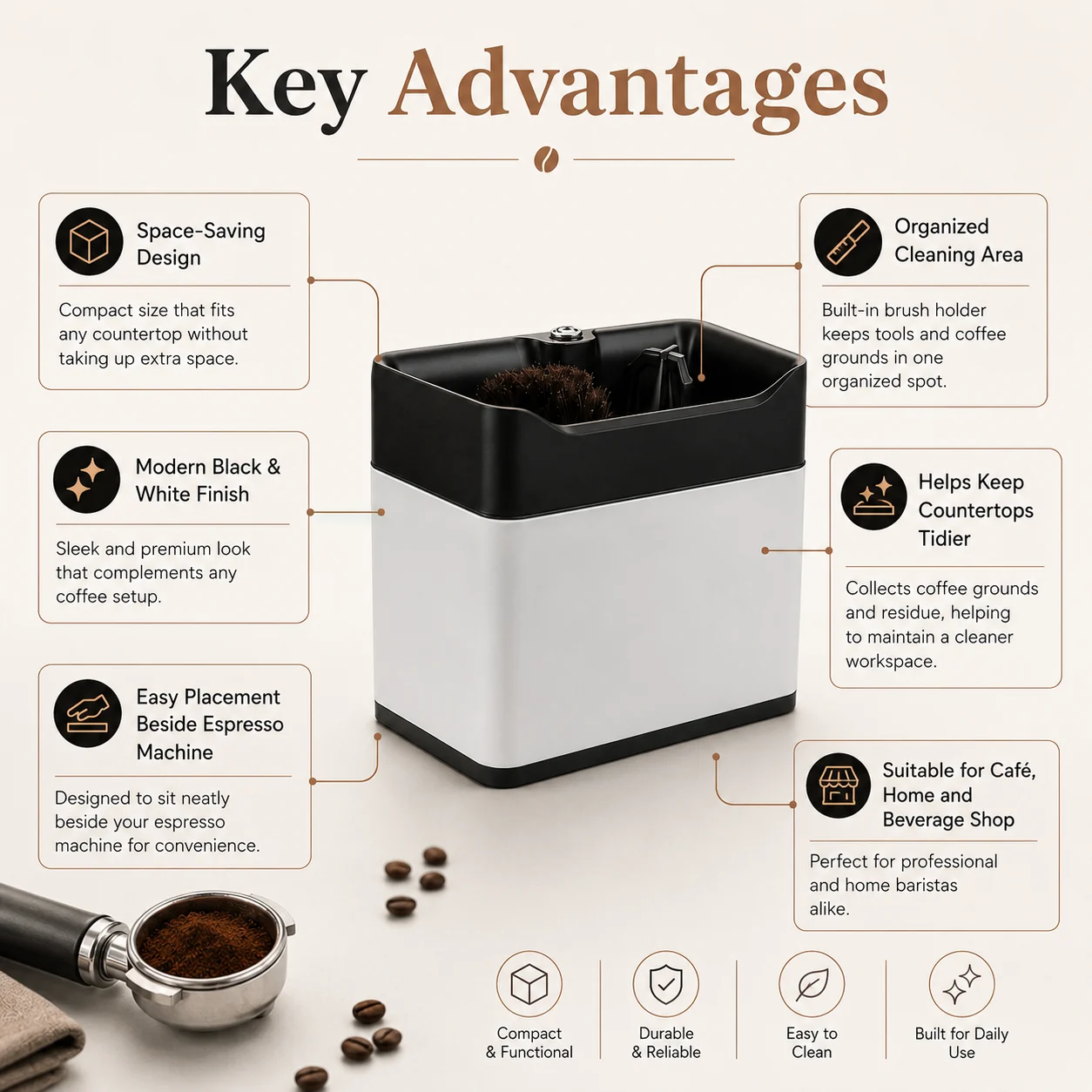
The scraper removes the used puck and larger grounds before the powered brush cleans the basket more thoroughly.
Cleaner Countertop
Coffee grounds are directed into the internal collection container, helping reduce loose residue around the coffee bar.
Compact Countertop Size
The narrow body fits beside many espresso machines and leaves more working space for the grinder, tamper and milk pitchers.
Efficient Barista Workflow
The dedicated cleaning station reduces unnecessary movement and helps the operator prepare the next portafilter more quickly.
Reduced Repetitive Knocking
Scraping and powered brushing reduce the need to repeatedly strike the portafilter against a traditional knock box.
Modern Appearance
The black-and-white finish complements stainless-steel espresso machines and modern café interiors.
5. Commercial Coffee Portafilter Cleaner Applications
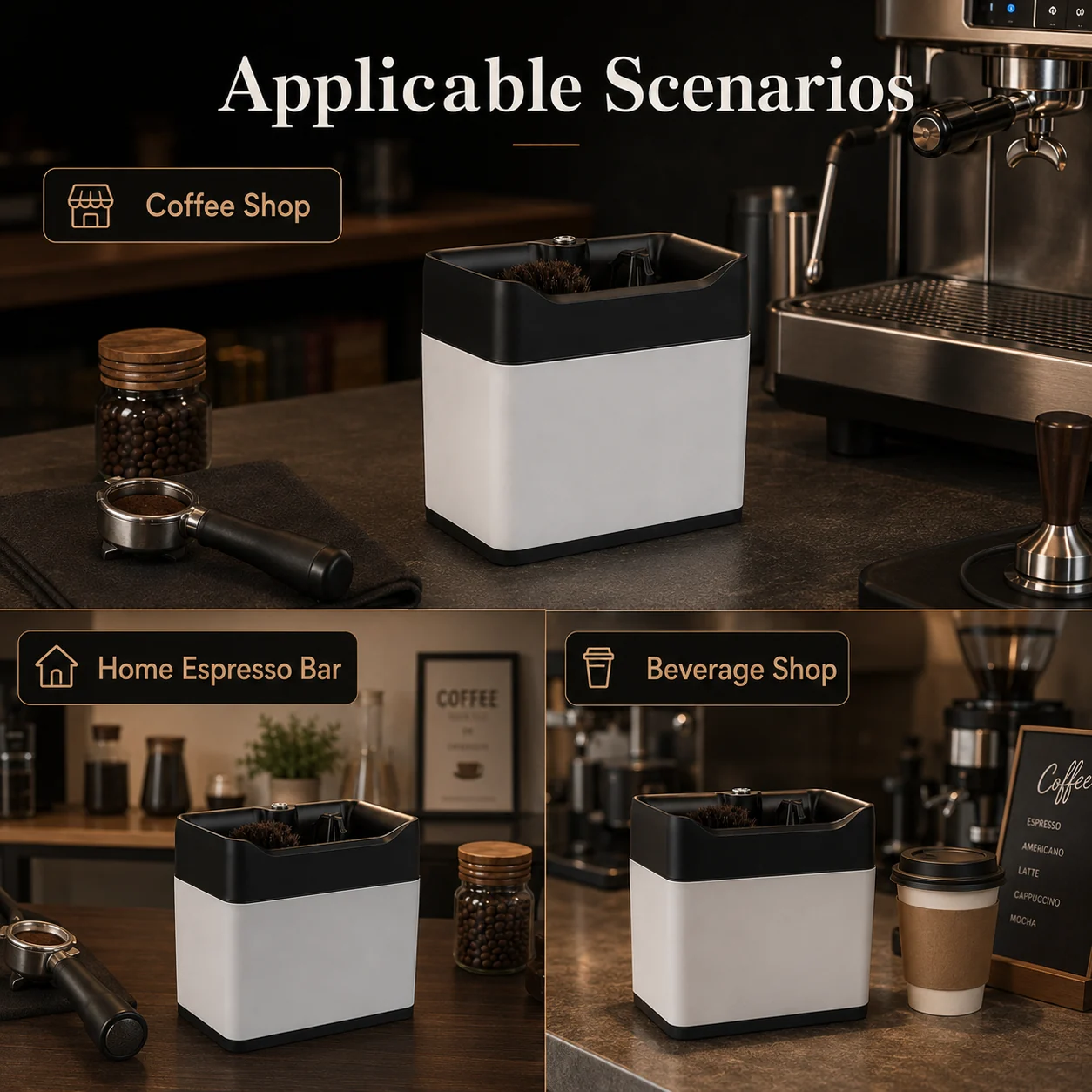
Commercial Coffee Shops
Coffee shops with frequent espresso orders can place the cleaner between the espresso machine and grinder. This creates a logical sequence for removing the used puck, cleaning the basket, dosing fresh coffee and tamping.
Milk Tea and Beverage Shops
Beverage stores that also sell espresso-based drinks can use the compact machine to build a cleaner coffee station without installing a large cleaning system.
Restaurants, Bakeries and Dessert Shops
Restaurants and bakeries with a small commercial espresso machine can use the cleaner to simplify portafilter preparation and keep the customer-facing counter more organized.
Home Espresso Bars
Home users who prepare coffee frequently can use the machine to reduce scattered coffee grounds and create a dedicated cleaning point beside the espresso machine.
Training Rooms and Equipment Showrooms
Coffee-training centres and equipment showrooms can use the cleaner to demonstrate a repeatable commercial workflow for removing pucks and preparing baskets.
6. Product Structure and Detail Highlights
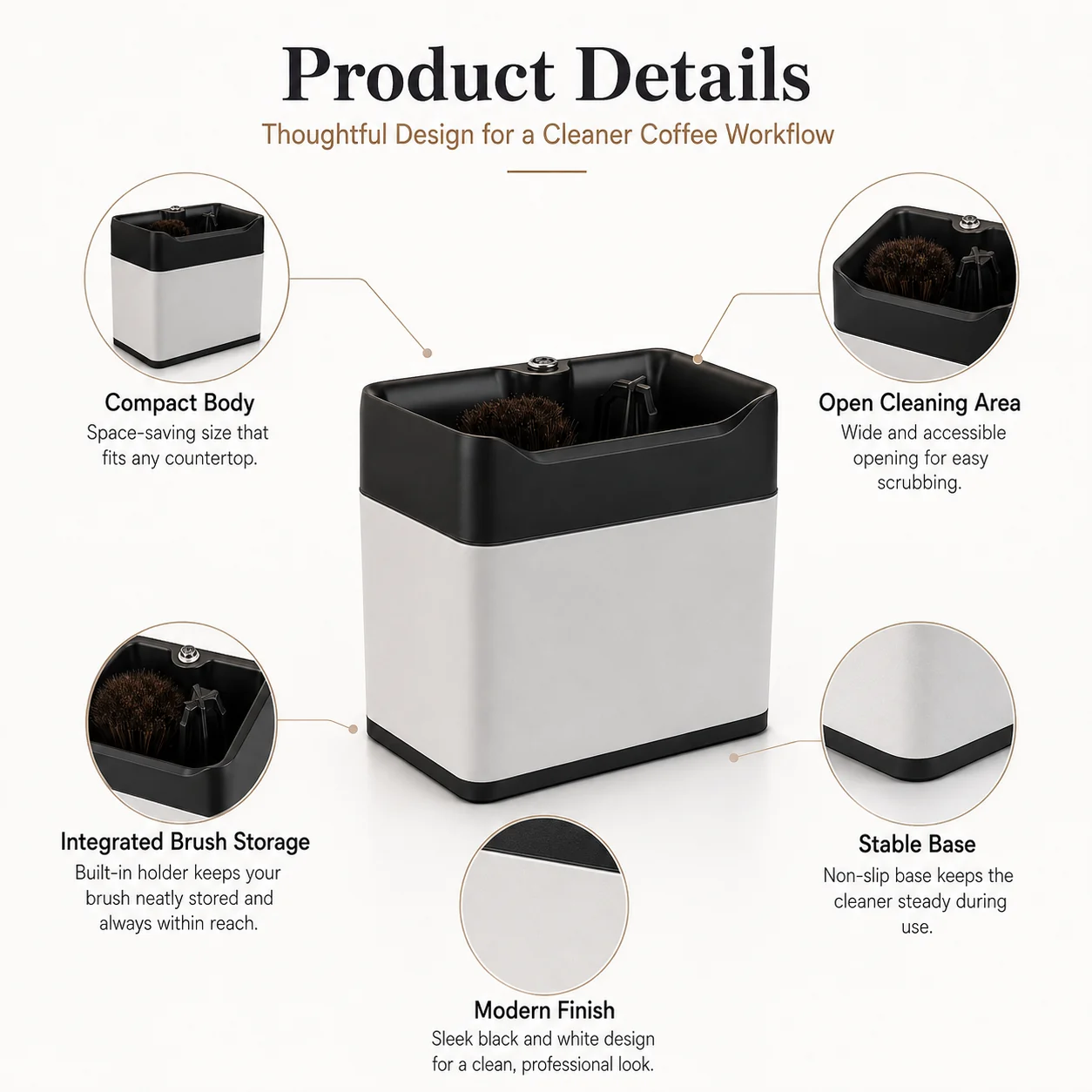
| Component | Function |
|---|---|
| Scraper Blade | Supports the inverted portafilter and helps release the used coffee puck and larger residue when pressed downward. |
| Powered Cleaning Brush | Rotates inside the portafilter basket to remove remaining coffee particles after scraping. |
| Open Operating Area | Provides space for positioning and pressing the portafilter during the two cleaning stages. |
| Upper Operating Compartment | Holds the scraper and brush assembly and can be removed during maintenance according to the product structure. |
| Internal Grounds Container | Collects the used coffee puck and loose grounds for centralized disposal. |
| Stable Base | Helps keep the machine steady while the operator presses the portafilter downward. |
7. How to Use the Commercial Coffee Portafilter Cleaner
The following operating process is based on the actual demonstration video. The portafilter is held upside down throughout the scraping and brushing stages, with the basket facing downward toward the cleaner.
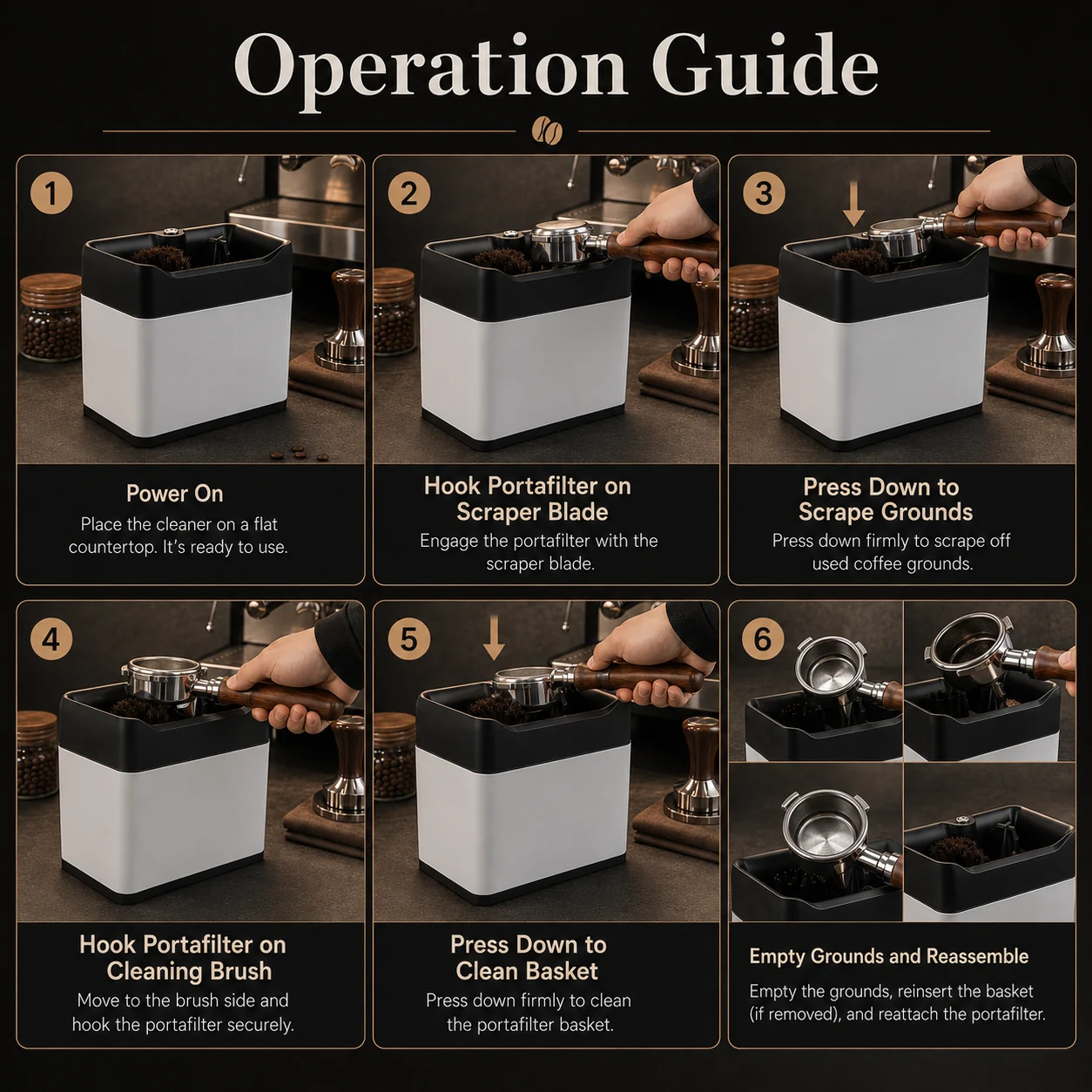
Place the Cleaner on a Stable Countertop
Position the machine on a flat and dry surface. Leave enough room for the portafilter handle and connect the correct power supply.
Turn On the Power
Switch on the machine before cleaning. Keep hands, cloths and loose objects away from the powered brush.
Invert the Portafilter over the Scraper
Hold the portafilter upside down with the basket facing the machine. Position the basket and portafilter securely against the scraper blade.
Press Down to Remove the Coffee Puck
Apply firm downward pressure so the scraper releases the used puck and larger coffee residue into the grounds container.
Move the Portafilter to the Cleaning Brush
Keep the basket facing downward and position it over the powered brush after the main puck has been removed.
Press Down to Clean the Basket
Press the portafilter downward so the rotating brush reaches the inside of the basket. Lift it after the remaining residue has been removed.
Inspect the Basket
Check the basket and filter holes. Repeat a brief brush cycle when necessary, then prepare the portafilter for the next coffee dose.
8. Coffee Bar Placement and Workflow Tips
Place It Near the Espresso Machine
The cleaner should be within comfortable reach of the brewing area. A common layout is espresso machine → portafilter cleaner → grinder → tamper, or another sequence that matches the shop’s workflow.
Leave Clearance for the Portafilter Handle
Make sure surrounding equipment does not block the long portafilter handle while the operator presses downward.
Keep the Area Dry
Avoid placing the unit directly beneath a steam wand, hot-water outlet or sink edge. Excess moisture can cause coffee residue to stick inside the collection container.
Use a Stable Counter
Because the cleaning process involves downward pressure, the machine should sit on a strong and level work surface.
Empty the Grounds Container before It Becomes Full
High-volume stores should inspect the collection container during service. Excessive buildup can make removal and cleaning more difficult.
9. Commercial Coffee Portafilter Cleaner Cleaning and Maintenance
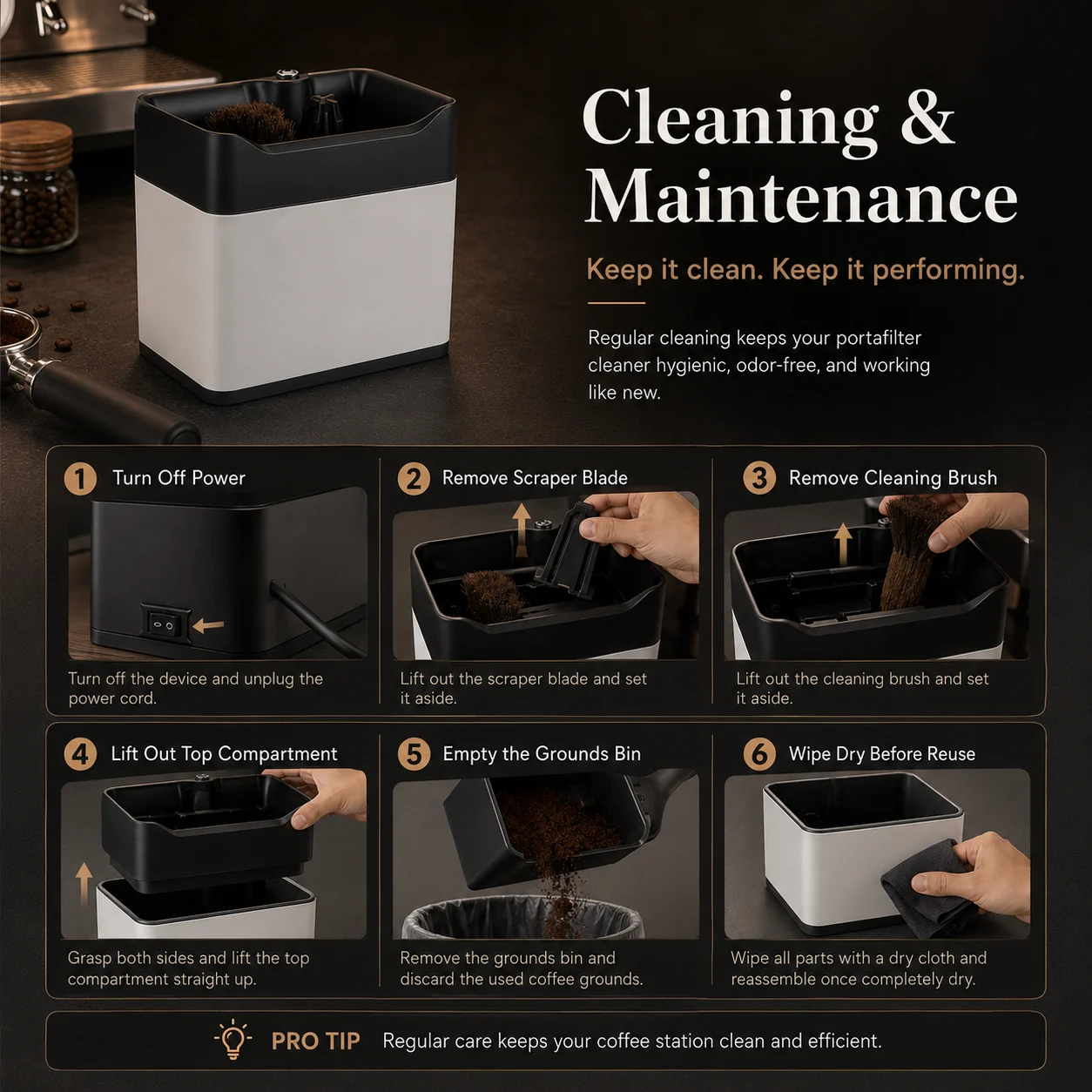
Turn Off and Disconnect the Power
Always switch off and unplug the machine before removing parts or cleaning the interior.
Remove the Scraper Blade
Lift out the scraper component according to the product structure and place it aside for cleaning.
Remove the Cleaning Brush
Lift out the brush assembly carefully. Remove coffee particles from the bristles and inspect them for wear.
Lift Out the Upper Operating Compartment
Hold both sides and lift the upper compartment straight upward to access the internal collection area.
Remove and Empty the Grounds Container
Take out the collection container and dispose of the used coffee grounds. Do not allow damp residue to remain inside for long periods.
Wipe and Dry All Parts
Wipe the body and removable parts with a soft cloth. Use only cleaning methods approved for the final product materials.
Reassemble before Use
Make sure every component is completely dry and correctly installed before reconnecting the power.
Daily Maintenance
- Empty the grounds container before excessive buildup occurs.
- Brush loose residue from the scraper and cleaning-brush area.
- Wipe the exterior and keep the machine dry.
- Check that the scraper and brush are correctly installed.
Regular Inspection
- Inspect the brush bristles for wear, damage or deformation.
- Check the scraper for looseness or damaged edges.
- Inspect the power cord, plug and switch.
- Confirm that the upper compartment and grounds container fit securely.
- Request professional service if the motor produces unusual sound or vibration.
10. Commercial Coffee Portafilter Cleaner Buying Guide
- Confirm voltage, frequency and plug type for the destination market.
- Confirm whether the scraper blade and cleaning brush are included.
- Ask whether replacement brushes and scraper parts are available.
- Confirm the supported portafilter and basket sizes.
- Verify the exact machine dimensions and available countertop space.
- Ask for rated power, brush speed and continuous operating recommendations.
- Confirm body materials, internal-container materials and cleaning requirements.
- Check carton size, gross weight, minimum order quantity and export packaging.
Replacement-part availability is especially important for commercial users. The brush and scraper are working components that may wear over time, so buyers should confirm part availability before placing a wholesale order.
11. Commercial Coffee Portafilter Cleaner FAQs
How is this cleaner different from a traditional knock box?
A traditional knock box removes the puck through repeated impact. This machine uses a scraper to release the puck and a powered brush to clean the basket afterward.
What is the correct cleaning order?
Invert the portafilter, press it against the scraper to remove the puck, then move it to the powered brush and press down to clean the basket.
Does the brush remove the complete coffee puck?
The scraper should remove the complete puck and larger residue first. The brush is intended for cleaning the remaining particles inside the basket.
What is the approximate product size?
The dimensions shown are approximately 262 × 138 × 216 mm.
Is this product suitable for a busy café?
It is designed to improve repeated portafilter cleaning, but buyers should confirm rated power, brush speed and recommended workload for their expected daily volume.
How often should the grounds container be emptied?
Empty it before it becomes full. High-volume stores may need to inspect and empty the container several times during a service period.
Can the scraper and brush be replaced?
Confirm replacement-part availability with the supplier before ordering.
12. Choosing a Commercial Coffee Portafilter Cleaner
A commercial coffee portafilter cleaner can simplify one of the most repetitive parts of espresso preparation. By using a scraper for the used puck and a powered brush for remaining basket residue, the machine supports a faster and more organized cleaning sequence.
Its compact 262 × 138 × 216 mm body is suitable for cafés, beverage shops, restaurants, bakeries and home espresso stations. Correct placement, regular grounds disposal and proper brush and scraper maintenance are essential for reliable long-term use.
Contact Foshan Weiqi Electromechanical Equipment Co., Ltd. for voltage options, product configuration, replacement parts, packaging information, wholesale quantities and export inquiries.
Note: Product specifications, appearance, internal structure and included accessories may be updated. Confirm the final configuration before ordering.