
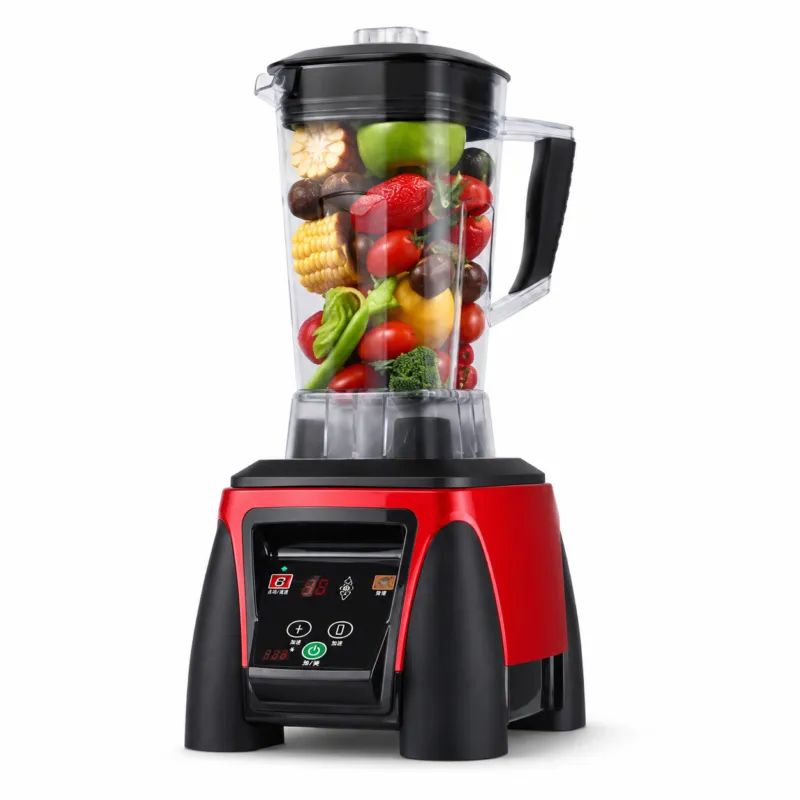
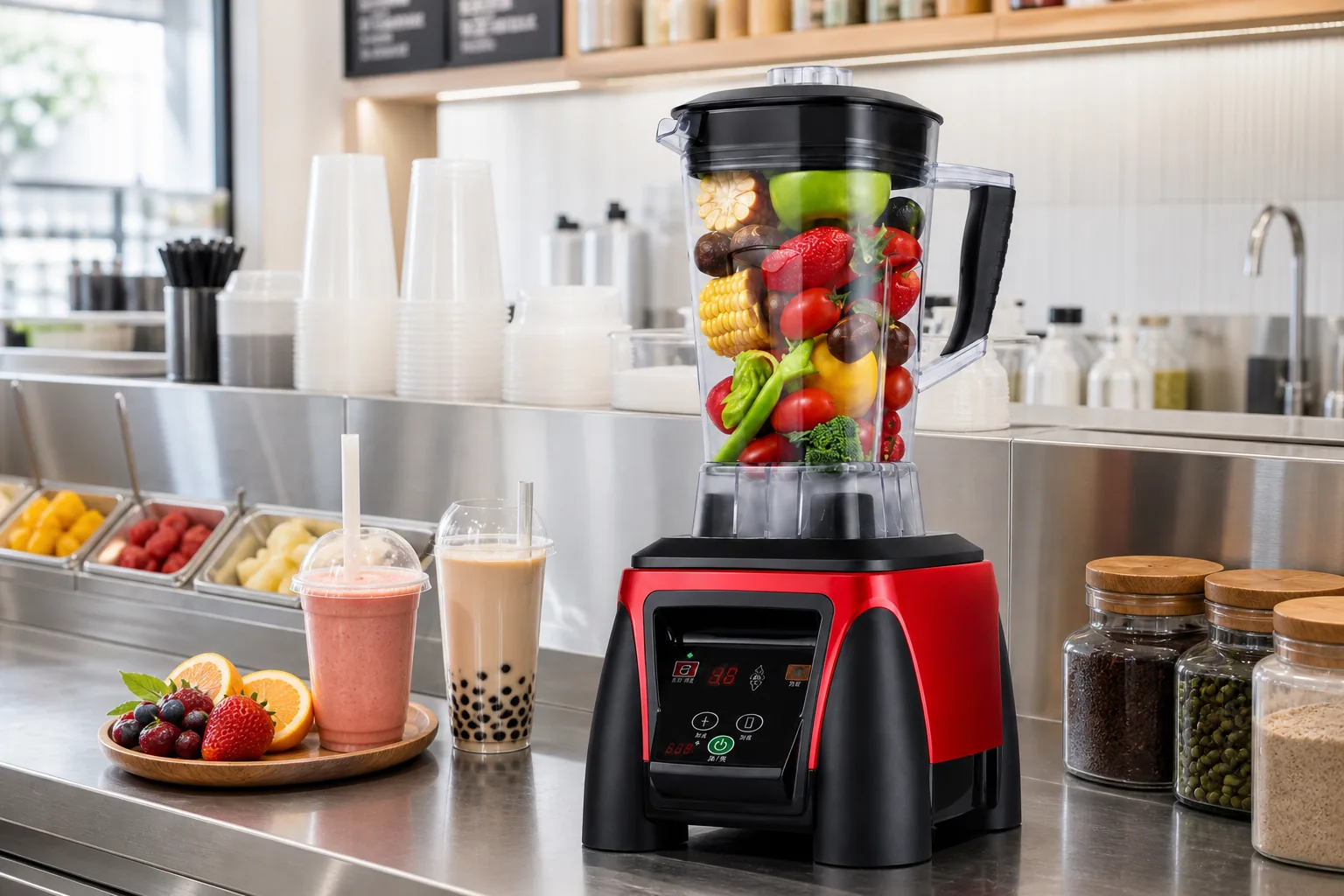
A 2200W commercial blender can be a practical core machine for a smoothie bar, bubble tea shop, cafe, breakfast shop, restaurant, or distributor building a beverage-equipment range. Power alone, however, does not determine whether a blender will suit a menu. Jar size, blade geometry, recipe load, controls, cleaning access, voltage, spare parts, and after-sales support all affect daily results.
The YD-1108 commercial high-speed blender is designed for smoothies, milk tea, fruit drinks, soy beverages, crushed-ice drinks, thick soups, grain drinks, and selected food-preparation tasks. This guide explains its listed specifications, where it fits, and what a commercial buyer should confirm before ordering.
YD-1108 2200W Commercial Blender at a Glance
| Model | YD-1108 |
|---|---|
| Rated power | 2200W |
| Listed maximum speed | 40,000 rpm |
| Jar capacity | 2,000 ml |
| Jar material | BPA-free Tritan |
| Blade assembly | Six-blade titanium-alloy serrated set |
| Listed jar temperature range | -40 to 120 degrees C |
| Motor protection | Automatic power-off protection for overheating |
| Approximate dimensions | 22 x 22 x 50 cm |
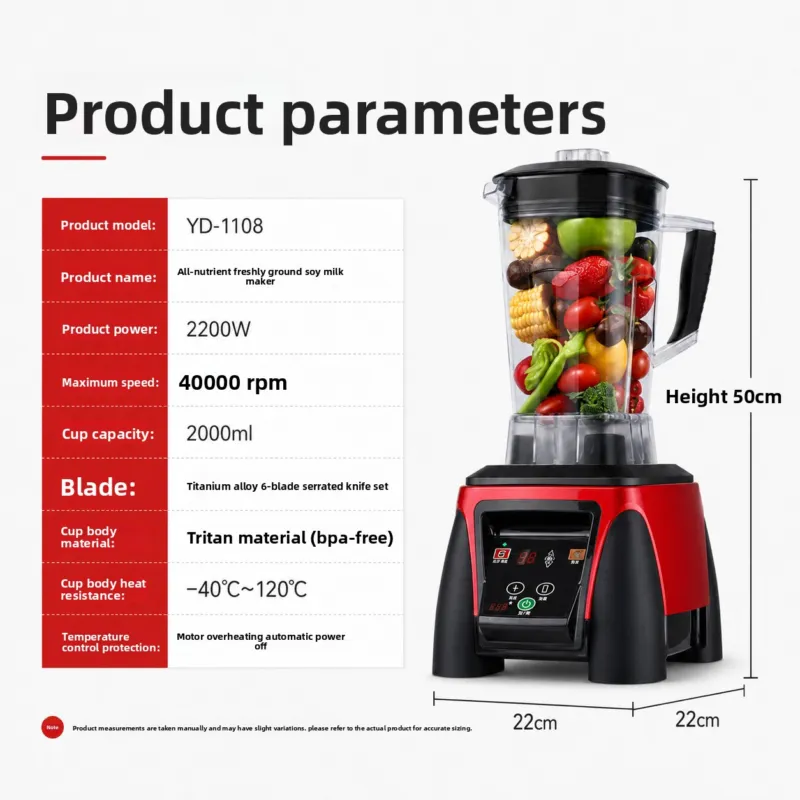
Specifications are based on the current product materials and may vary by production batch or destination-market configuration. Confirm voltage, frequency, plug, certification, package contents, and final specifications before ordering.
What Can a 2200W Commercial Blender Make?
As a 2200W commercial blender, the YD-1108 combines a high-speed motor, a large jar, and a multi-directional blade assembly. It is intended to move liquid and solid ingredients through the cutting zone quickly, helping operators achieve a more even texture in busy beverage-service environments.
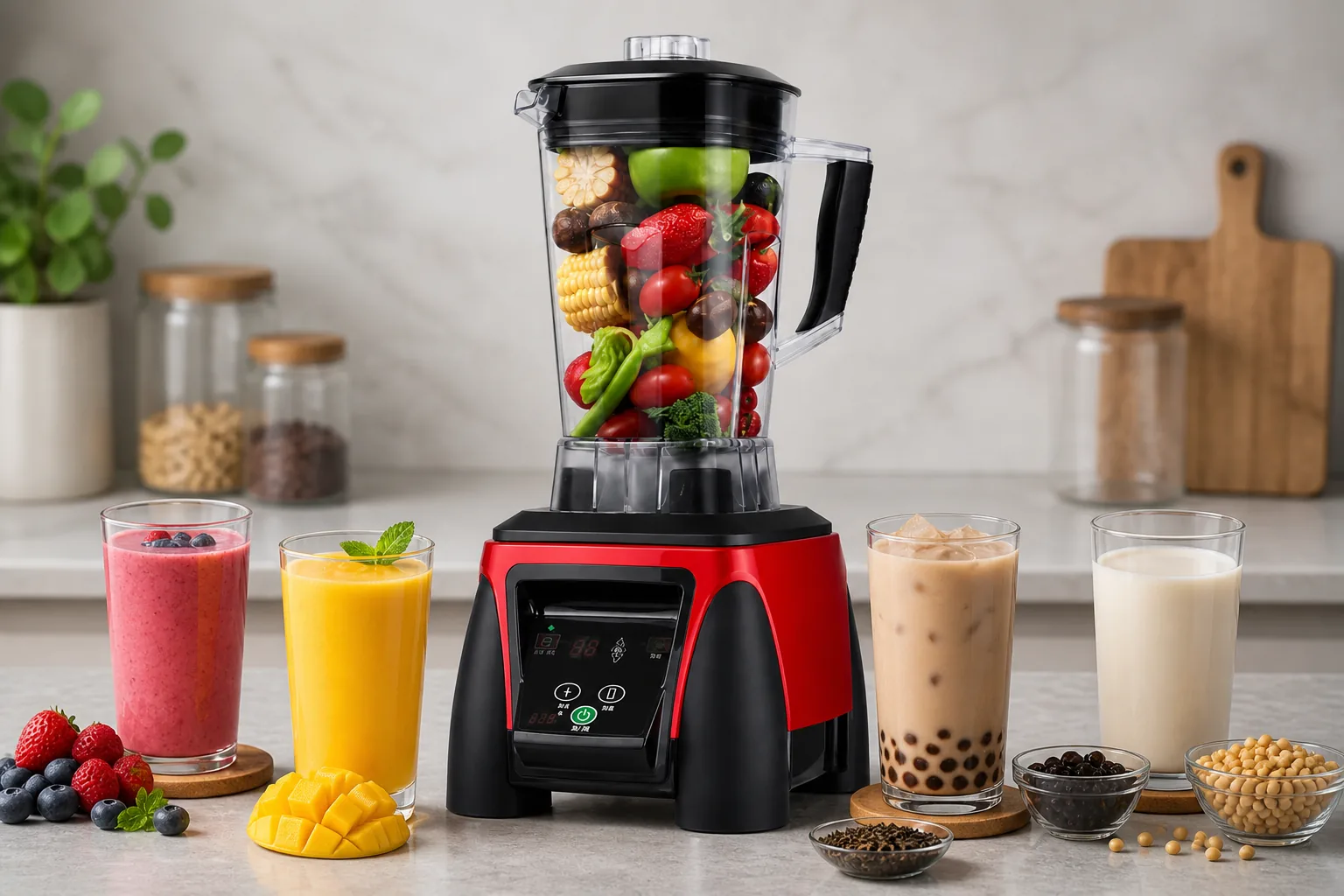
- Smoothies and fruit drinks: fresh or frozen fruit, liquids, yogurt, syrups, and ice can be processed into blended beverages.
- Milk tea and frappe-style drinks: tea, milk, flavoring, powder, and ice can be blended for a consistent finish.
- Soy and grain beverages: the blender can grind prepared beans and grains, but cooking, filtering, and food-safety steps still depend on the recipe.
- Thick soups and sauces: the variable controls help adjust texture for selected kitchen-preparation tasks.
- Crushed-ice drinks: the product is positioned for ice-based beverages, although cube size, ice-to-liquid ratio, and batch volume should be tested for each recipe.
The listed jar-material range does not mean every liquid up to 120 degrees C is safe to blend. Hot ingredients can create steam and pressure. Follow the supplied manual, verify that the lid is correctly vented for the intended recipe, avoid boiling liquids, and never open the lid while the blades are moving.
Why 2200W Commercial Blender Power Is Only Part of the Decision
A 2200W motor provides substantial input power, while the listed maximum speed describes no-load or peak blade speed under specified conditions. Real blending performance also depends on torque, blade design, jar shape, ingredient temperature, liquid ratio, batch volume, and operating time.
When evaluating a 2200W commercial blender, the useful question is not simply, “Is the wattage high?” It is, “Can the machine repeat our target recipe during the busiest service period without unacceptable texture variation, overheating, or downtime?” Request a recipe test when possible and evaluate the result using the same fruit, ice, powders, and serving size used in your business.
How to Choose a 2200W Commercial Blender for Your Menu
1. Match the Blender to the Recipe
List the drinks or foods that will account for most daily orders. Smoothies with frozen fruit, crushed-ice milk tea, soy beverages, and thick sauces place different demands on a blender. Record ingredient size, starting temperature, liquid ratio, target texture, and expected blend time.
2. Check Working Capacity, Not Just Jar Capacity
The YD-1108 has a listed 2L jar, but the jar should not be filled to the rim. A safe working volume leaves room for circulation and expansion. Thick mixtures and hot ingredients generally require more headspace. Confirm the recommended maximum working level in the manual.
3. Evaluate Controls and Recipe Repeatability
The front panel provides speed and time adjustment. For a shop with several employees, timed recipes can reduce operator-to-operator variation. Build a recipe sheet that specifies ingredient order, quantities, speed, and blending time, then train staff to stop the machine if unusual vibration, odor, noise, or leakage occurs.
4. Confirm Counter Space and Ventilation
The machine is approximately 22 x 22 x 50 cm. Allow extra clearance for removing the lid and jar, loading ingredients, and moving air around the motor base. Do not block ventilation openings or place the base in standing water.
5. Ask About Replacement Parts
Jars, lids, drive couplings, blade assemblies, seals, and switches are normal service items in a commercial beverage operation. Before a wholesale or project order, confirm spare-part availability, replacement procedures, warranty terms, and technical support.
6. Confirm Destination-Market Requirements
Voltage, frequency, plug type, and electrical certification vary by country. Buyers serving regulated food-service markets should also ask which sanitation and material documents are available. For context, NSF/ANSI 8 covers sanitation requirements for commercial powered food-preparation equipment. This reference is a buyer checklist, not a statement that the YD-1108 carries NSF certification.
Practical 2200W Commercial Blender Loading Workflow
- Place the motor base on a level, dry, stable counter with adequate ventilation.
- Inspect the jar, lid, blade assembly, drive connection, cable, and plug before use.
- Add liquids first, followed by powders and soft ingredients, then fruit or vegetables, with ice and frozen ingredients added last.
- Keep the total load below the recommended working level and secure the lid.
- Start at an appropriate lower speed, then increase as the mixture begins to circulate.
- Use the shortest time that consistently achieves the required texture.
- Wait for the blades to stop completely before removing the jar or opening the lid.
This liquids-first loading order is also commonly recommended in high-performance blender operating guidance because it helps ingredients circulate toward the blades. Every recipe still needs its own validated quantities and timing.
2200W Commercial Blender Cleaning and Allergen Control
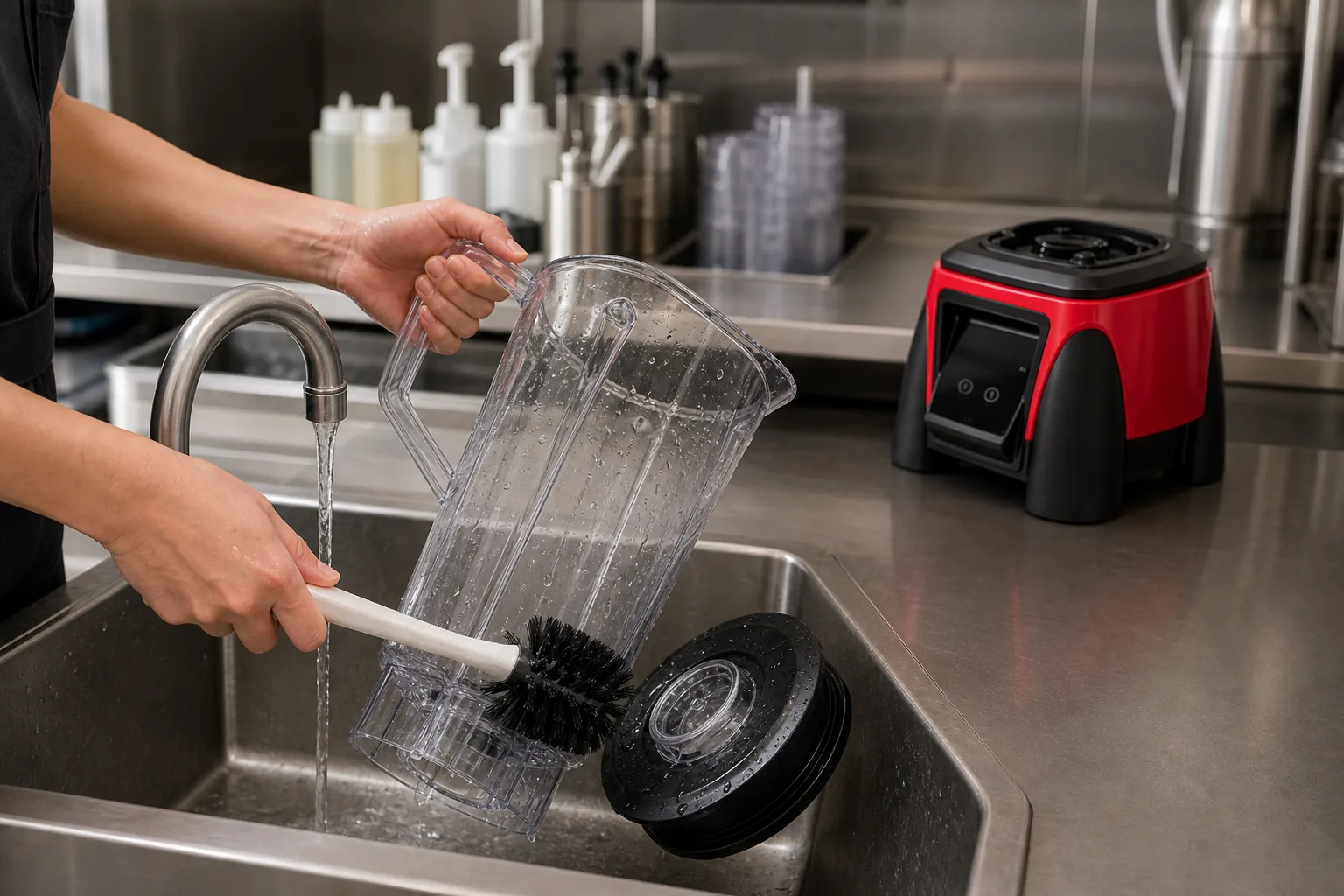
Rinse the jar promptly so fruit fiber, milk, syrup, soy, and powders do not dry around the blade assembly or lid. Disconnect power before detailed cleaning, keep the motor base out of water, and use a long-handled brush when manual cleaning near the blades is required.
In a commercial operation, washing and sanitizing are separate steps. The FDA Food Code states that food-contact surfaces and utensils should be sanitized after cleaning and before use. FDA research on allergen control also found a complete wash-rinse-sanitize-air-dry process effective at reducing allergen transfer.
Use cleaning chemicals and sanitizer concentrations approved for your location, follow their labels, and check whether the jar and lid are dishwasher-safe before placing them in a machine. Where recipes contain milk, soy, nuts, or other allergens, consider dedicated jars or a documented allergen-cleaning procedure.
Commercial Blender, Milkshake Mixer, or Juicer?
Choose the equipment by process rather than by product name. A high-speed blender is the versatile choice for smoothies, ice-based beverages, purees, and blended fruit or grain drinks. A commercial milkshake mixer is better suited to combining soft ice cream, milk, syrups, and powders without crushing hard ingredients. A manual citrus juicer extracts juice from oranges, lemons, limes, and grapefruit without blending the peel and pulp into the drink.
Questions to Ask Before Requesting a Quote
- Which voltage, frequency, and plug configurations are available?
- What are the recommended working capacity and continuous-duty limits?
- Can the supplier test your key smoothie, milk tea, soy drink, or sauce recipe?
- Which jar, blade, seal, coupling, and control-panel spare parts are available?
- What warranty and remote technical support are included?
- Which food-contact, electrical, and destination-market documents are available?
- What are the MOQ, lead time, carton dimensions, and shipping terms?
- Are logo, color, control-panel, manual, and packaging customization available?
Frequently Asked Questions
Is This 2200W Commercial Blender Suitable for a Bubble Tea Shop?
Yes. It is designed for milk tea, smoothies, fruit drinks, crushed-ice beverages, and similar commercial drink preparation. Test each recipe and establish standard quantities, speed, and time.
Can this blender make soy milk?
It can grind prepared soybeans and liquid into a fine mixture. Depending on the recipe, separate soaking, cooking, filtering, and food-safety steps may still be required. The product should not be assumed to include a built-in heating function.
Does a 2L jar produce 2L of finished drink?
Not necessarily. The safe working volume is lower than total jar capacity because ingredients need space to circulate and may expand. Follow the fill markings and supplied manual.
Can it blend hot liquids?
The Tritan jar has a listed material range of -40 to 120 degrees C, but safe operation also depends on lid venting, fill level, and recipe conditions. Do not blend boiling liquids, and confirm the approved process in the user manual.
Request YD-1108 Wholesale Pricing
View the full YD-1108 commercial high-speed blender product page for product images and current details. Wholesale buyers, beverage-shop projects, distributors, and OEM/ODM customers can request pricing, voltage options, packaging information, spare parts, lead time, and shipping support.
You can also review more commercial juicers and blenders or use the contact page to send your project requirements.