
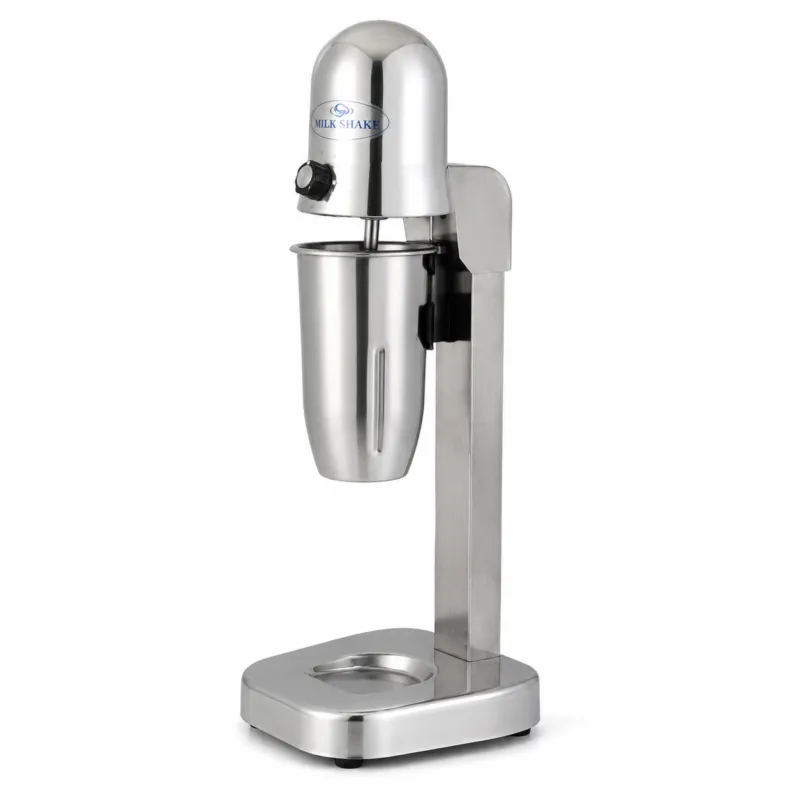
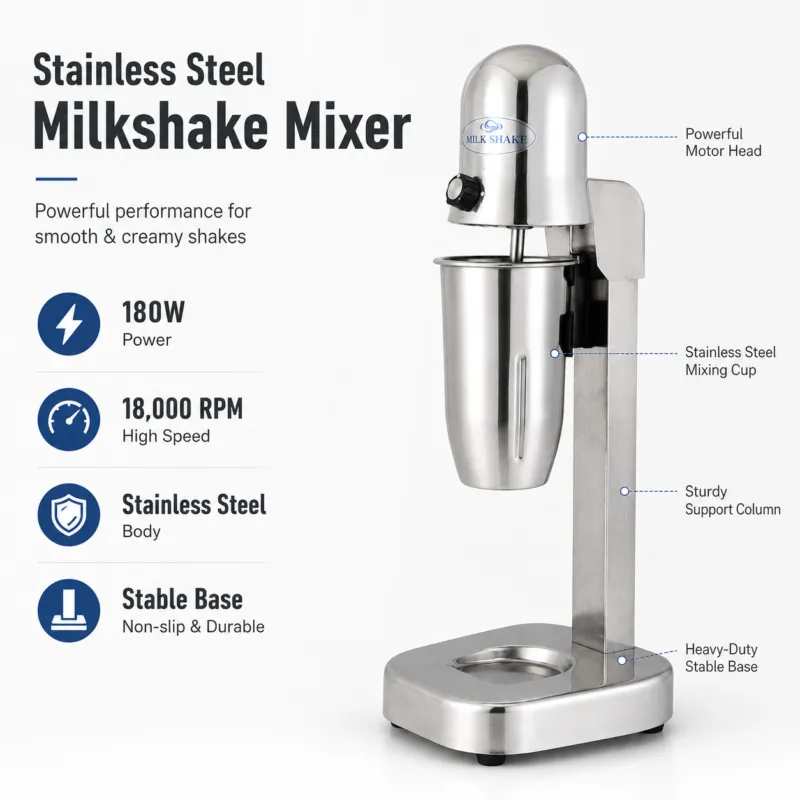
A commercial milkshake mixer for cafes gives dessert shops, ice cream counters and protein bars a focused way to combine milk, softened ice cream, syrups and powders. Unlike a general-purpose blender, a spindle drink mixer is designed around fast aeration and blending inside a metal cup. That makes it useful when the menu depends on smooth, repeatable shakes rather than crushed ice or chopped solid ingredients.
The wiki 180W single-head milkshake mixer has a listed speed of approximately 18,000 rpm, a removable stainless steel cup and a narrow countertop footprint. This guide examines the published specifications, suitable applications, workflow, cleaning considerations and questions a commercial buyer should confirm before ordering.
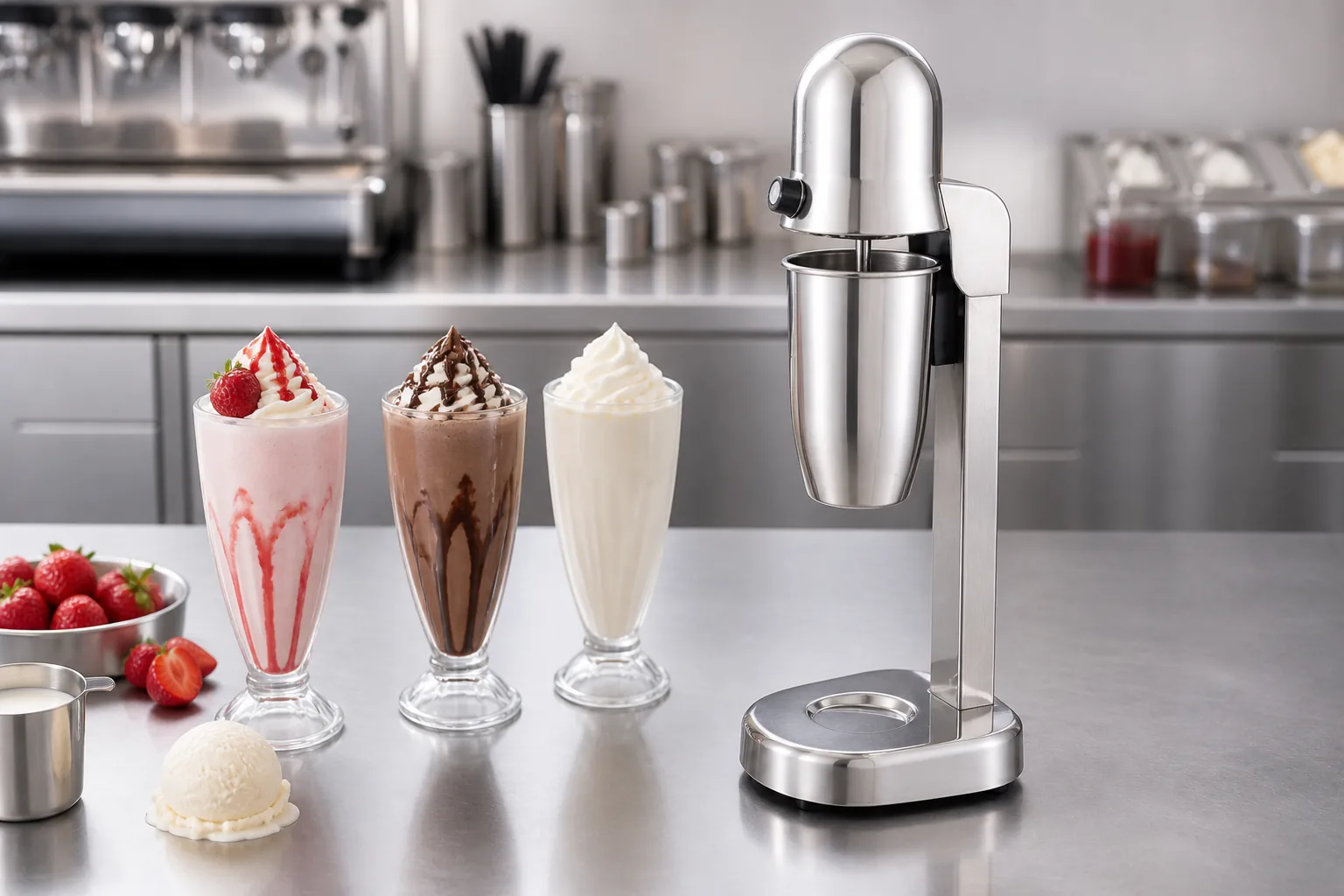
What Is a Commercial Milkshake Mixer for Cafes?
A commercial milkshake mixer uses a high-speed vertical spindle to circulate soft ingredients inside a mixing cup. The rotating agitator helps break up powder clumps, distribute syrup and incorporate air. The result can be a lighter, more uniform drink when the recipe, fill level and mixing time are controlled.
This format is especially practical for shops that prepare individual shakes to order. The cup can be loaded, mounted under the spindle, removed and poured directly into a serving glass. Because there is no large blender jar or blade assembly to handle, the workstation can also be simple to organize. However, the spindle is not intended to chop hard materials. Large ice cubes, nuts, coffee beans and solid frozen pieces require equipment designed for crushing or grinding.
Commercial Milkshake Mixer for Cafes: Specifications
| Product type | Single-head countertop drink mixer |
|---|---|
| Rated power | 180W |
| Rated voltage | 220V / 50Hz |
| Listed speed | Approximately 18,000 rpm |
| Product dimensions | 166 × 186 × 545mm |
| Mixing cup dimensions | 65 × 100 × 170mm |
| Net weight | Approximately 4.0kg |
| Cup and exterior | Stainless steel |
| Control | Front knob |
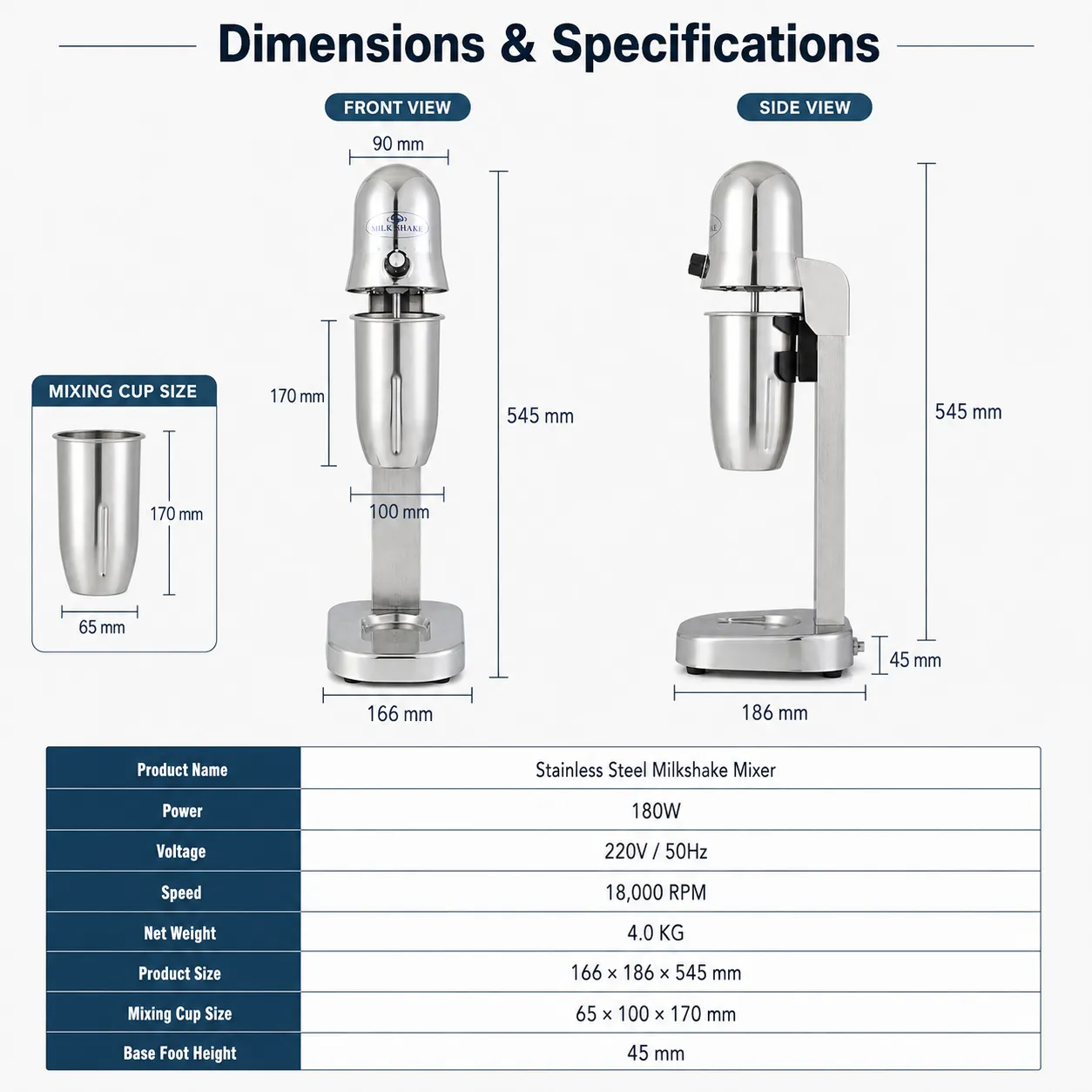
Specifications are based on the current product materials. Appearance, plug, voltage configuration, packaging and minor details may vary by batch or destination market. Confirm the final configuration and supplied manual before ordering.
When evaluating a commercial milkshake mixer for cafes, the 166 × 186mm base uses little counter area, but buyers should plan more than the nominal footprint. Staff need clearance to lift and remove the cup, load ingredients and wipe the spindle safely. The 545mm overall height must also fit beneath shelves. In addition, a dry, level and stable surface helps the 4kg machine remain steady during operation.
Commercial Milkshake Mixer for Cafes vs. Blender
Choose the machine by process, not simply by wattage. A drink mixer moves soft ingredients around a spindle and can aerate a shake without cutting fruit or ice into small pieces. A high-speed blender uses sharp blades inside a closed jar and is the better choice for smoothies with frozen fruit, crushed-ice drinks, purees and recipes that require particle-size reduction.
For a classic milkshake made with milk, softened ice cream and syrup, the spindle format can provide a straightforward single-serving workflow. For a frappe with hard ice, a smoothie with frozen berries or a nut-based beverage, use a suitable commercial blender. Trying to use this machine as an ice crusher can damage the spindle, overload the motor or create an unsafe operating condition.
Drinks and Ingredients This Machine Can Handle
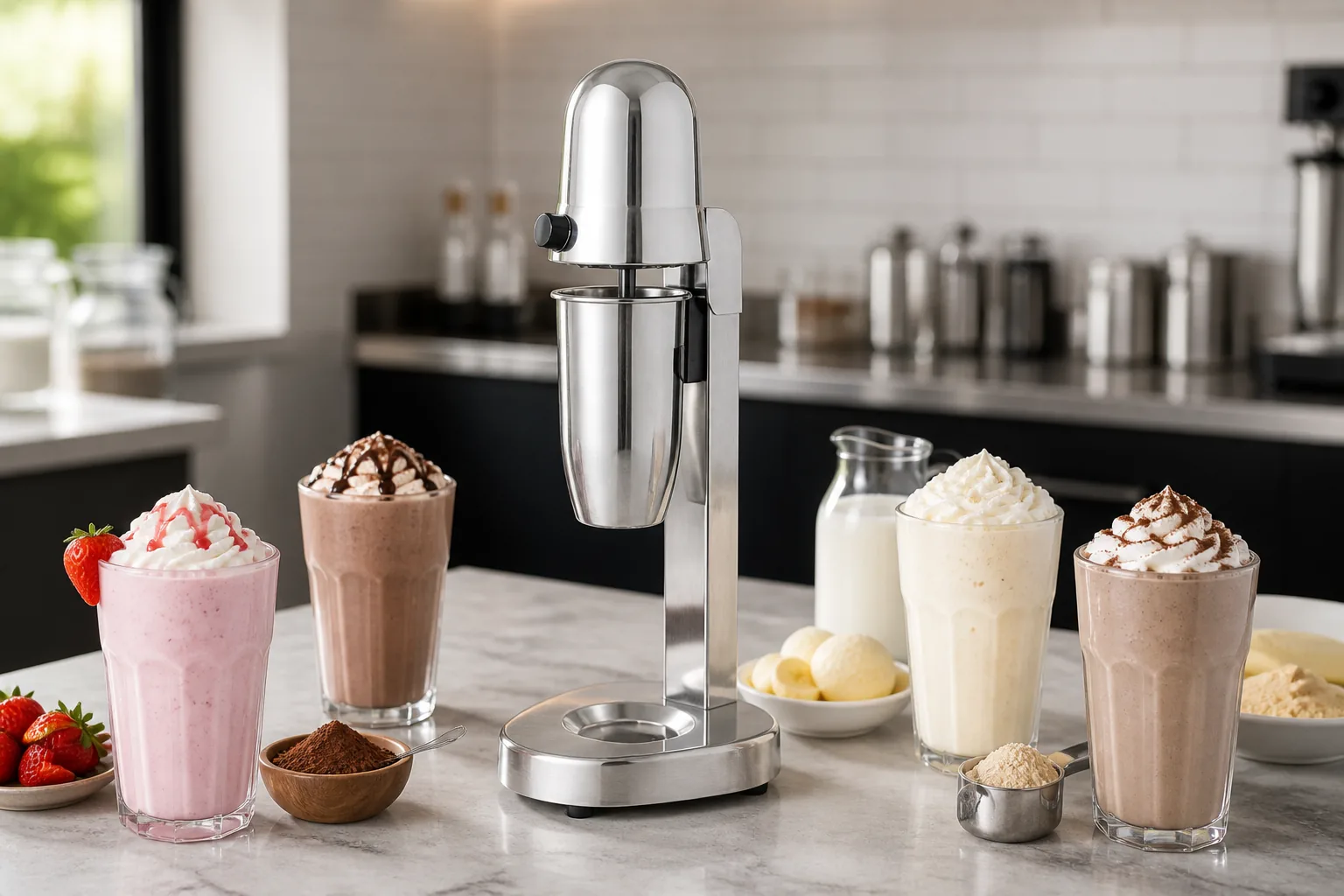
The machine is intended for liquids, powders and other soft ingredients. Suitable menu ideas include strawberry, chocolate, vanilla, coffee and banana milkshakes; flavored milk; protein drinks; cream-based beverages; and shakes made with softened ice cream. Fruit puree can add flavor, but hard fruit chunks should be processed separately before they enter the mixing cup.
Recipe consistency matters more than the number of flavors offered. Record the weight or volume of every ingredient, the order in which ingredients enter the cup and the mixing time that produces the target texture. Milk temperature, ice-cream softness, syrup viscosity and powder quantity can all change the result. Test the actual recipe before setting a service standard.
Standardizing a Commercial Milkshake Mixer for Cafes
- Place the machine on a dry, level and stable counter, then inspect the cable, plug, spindle, cup support and non-slip feet.
- Confirm that the local supply matches the ordered voltage and frequency.
- Add measured liquid first, followed by syrup or powder, then softened ice cream or other soft ingredients.
- Leave enough headspace for circulation. Overfilling can cause splashing and inconsistent mixing.
- Position the stainless cup correctly so the spindle sits inside without touching the cup wall or bottom.
- Start the mixer and observe the drink. Do not place a spoon, hand or other tool into the cup while the spindle is moving.
- Use the shortest validated time that achieves the required texture and stop if there is unusual noise or vibration.
- Wait for the spindle to stop completely before removing the cup, pouring the drink and beginning cleaning.
For a multi-employee shop, turn this sequence into a one-page recipe card. Include ingredient weights, starting temperatures, fill level and target time for each drink. Then check the first few servings at the beginning of every shift. This small control step usually improves repeatability more than allowing each operator to judge the recipe by eye.
Commercial Milkshake Mixer for Cafes: Cleaning and Allergens
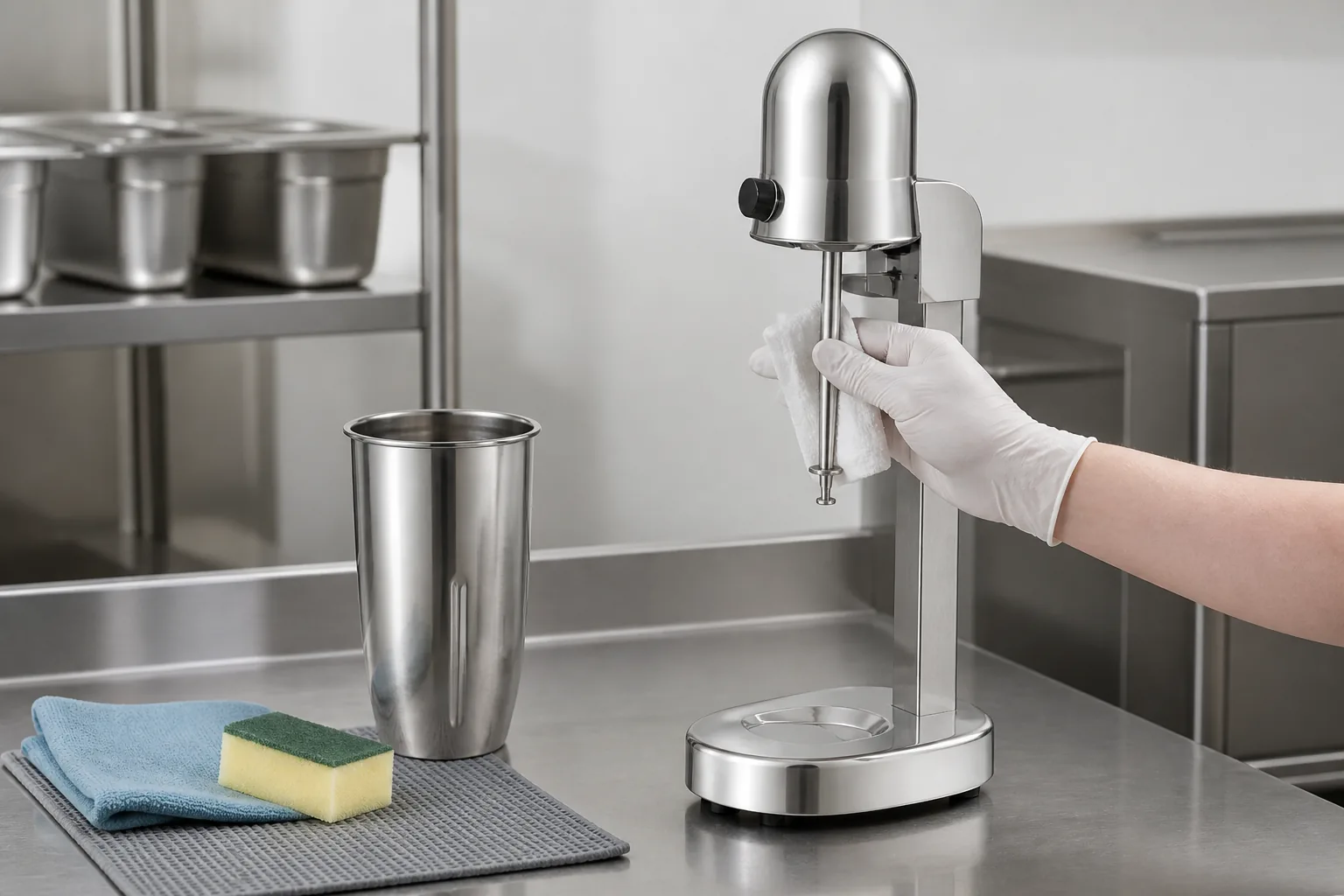
Milk, ice cream, syrup and protein powder dry quickly on the cup and spindle. Clean food-contact parts promptly rather than waiting until the end of a long shift. Switch off and unplug the machine first, wait for the spindle to stop, and keep water away from the motor head and electrical base. Wash the removable cup using products approved for food-service utensils and follow the supplied manual for the spindle.
In commercial food service, cleaning and sanitizing are separate steps. The FDA Food Code is a model used by regulators and explains the importance of clean food-contact surfaces and utensils. Follow the laws in your location, the sanitizer label and the equipment manual; allow cleaned parts to air dry where required.
Milk and other recipe components may also create allergen cross-contact. FDA research found that a complete wash-rinse-sanitize-air-dry process was effective at allergen removal and minimizing transfer on tested food-contact surfaces. Review the agency’s allergen cleaning findings, then document a procedure for your menu. Dedicated cups may be appropriate when a shop offers allergen-sensitive orders, but local guidance and staff training still apply.
Buying Checklist for Cafes and Shake Bars
Match the Equipment to the Menu
Estimate how many orders are milkshakes or soft mixed drinks and how many require crushing, chopping or pureeing. A focused shake menu may need one or more spindle mixers. A broader smoothie menu may need a blender station as well.
Check Throughput and Backup Capacity
A single-head machine prepares one cup at a time. Ask for the recommended duty cycle, maximum practical batch size and rest requirements. For a rush period, compare the cost of a second unit with the risk of a single workstation becoming a bottleneck.
Confirm Electrical and Market Requirements
This version is listed as 220V / 50Hz. Confirm voltage, frequency and plug type in writing for the destination. Buyers should also request available electrical, food-contact and sanitation documents. For context, NSF/ANSI 8 addresses sanitation requirements for commercial powered food-preparation equipment. This is a buyer reference only and does not state that this mixer carries NSF certification.
Plan for Cleaning and Spare Parts
Ask whether extra stainless cups, spindles, cup supports, switches and other service parts can be ordered. Confirm warranty terms, replacement procedures and technical support. A low-cost machine can become expensive if a small unavailable part stops production.
Wholesale Questions to Confirm Before Ordering
- What are the MOQ, unit price tiers and sample policy?
- Which voltage, frequency and plug configurations are available?
- What duty cycle and working fill level are recommended?
- Can the supplier test a representative milkshake or protein-drink recipe?
- Which spare cups and replacement components can ship with the order?
- What warranty and remote technical support are included?
- Which certifications or test documents are available for the destination market?
- Are logo, nameplate, manual, carton and private-label options available?
- What are the carton dimensions, lead time, shipping terms and final package contents?
Send the destination country, required quantity, local voltage, intended drinks and expected daily volume with the first inquiry. Those details help the supplier prepare a useful quotation instead of only returning a headline unit price.
Commercial Milkshake Mixer for Cafes FAQs
Can this mixer crush ice?
No. It is intended for milk, softened ice cream, syrup, powders and other soft ingredients. Use a suitable blender or ice crusher for hard ice cubes, nuts and solid frozen pieces.
Is 180W enough for a milkshake shop?
The listed 180W motor and approximately 18,000 rpm speed are intended for individual soft-ingredient drinks. Suitability still depends on viscosity, fill level, duty cycle and hourly demand. Test a representative recipe and confirm the recommended operating limits.
How much counter space is required?
The listed machine footprint is approximately 166 × 186mm and the height is 545mm. Allow additional space above and around the unit for cup removal, ingredient loading, ventilation and safe cleaning.
Can one cup be used for every recipe?
Operationally, one clean cup can serve multiple recipes. However, milk and other allergens require a documented cross-contact procedure. Depending on the menu and local requirements, dedicated cups may be a better choice for certain orders.
Request Wholesale Pricing and Product Details
View the full 180W commercial single-head milkshake mixer product page for the current gallery and specifications. Cafes, beverage chains, restaurant projects, distributors and OEM/ODM buyers can request price tiers, MOQ, voltage and plug options, spare cups, branding, packaging, lead time and shipping support.
You can also browse more commercial milk tea and beverage equipment or send complete project requirements through the contact page.